Click!

Showing posts with label Wolverine. Show all posts

Friday, September 28, 2012

Reviews for Recent Comic Book Publications


Mainstream comic books in their present condition are such that the amount of capital invested to seed the future cineplex blockbusters is reflected through examples of the medium's true potential, as expressed in successes and even in the failures of its most dismal dregs.  As well adjusted members of American society slough off the birthing cowl of high school, so too must comic books deal with their history as a medium geared and stunted for decades towards children and grown-up children.  Superheroes are as integral to comic books as a medium as the journey of the hero is integral to most ancient and modern mythologies.  How well they are dealt with matters a great deal to the industry. 

It is the intent here to draw from the entrenched dichotomy of the supposed mainstream, the "House DC" and the "House Marvel" if you will, and analyze the weight and worth of their good and bad and meh recent releases, individually or in the context of story.  In fact, scores for each issue are weighted towards story, with exceptional art tipping the scales towards bonus points unless dreadful. Assessments draw from the history of the standard for each title, within and without the medium's standardized history.  Attributions for each review are added on a title by title basis.  


I, VAMPIRE #0
Written by: 
Joshua Hale Fialkov
Art by: 
Andrea Sorrentino
Cover by: 
Clayton Crain


We all know that a "DC Vampire" book to fill in the gaps near where a proper Vertigo title (American Vampire) germinates was somewhat inevitable, given the nature of the social biosphere that lets pap like Twilight create a buzz among young fools.  I, Vampire emerged in the post-Flashpoint foam of the New 52 as a stand-alone anomaly, meeting at odd angles with Justice League Dark in the "fantastic and magic" corner of the DC Comics New 52 color-wheel.  It's done a serviceable job to its readers and seems to take the popular Faustian trope for its main character, Andrew Bennett.     

The art for this particular issue sells the story in panels seething modernist influences of the medium and accenting them with a tinge, a pinch, a mere touch of Gothic sensibilities.  We get the origin story for Bennet, his connection and encounter with Cain, the first vampire.  The pacing is spectacular, the multi-page unfoldings by Andrea Sorrentino worth careful examination and appreciation.  In the dustbins of comic books, this title shines like a blood-red diamond. A fabulous combination of elements and delivers what it promises, specifically vampires, in a fresh, slick, well-executed package.

9/10


THE AMAZING SPIDER-MAN #694
Writer: 
Dan Slott
Penciller: 
Humberto Ramos


Throughout Spidey's career, he has been crushed under tremendous weights multiple times, both literal and situation-based.  I can recall the hologram foil issue of Amazing Spider-Man #365 where Spider-Man fought the Lizard in one of their many sewer-based conflicts, brick-debris and a train from Penn Station nearly crushed him. In true-to-character fashion, he thinks of all those relying on him, and finds the strength to Hulk out in his own fashion and free himself. 329 issues and several crushings later, he does something he's never done before. He acts as landing gear for a plane with Aunt May and Aunt May's pilot boyfriend on it, as well as many other civilians, J. Jonah Jameson's family members, and a cute puppy in the cargo hold.

Why?  Well, a few issues back with his gig at Horizon Labs, Peter Parker accidentally gave an irresponsible iPhone twittering jackass punk kid superpowers. The kid named himself Alpha and, in this issue, smacks around a near-cosmic villain like a tiger pwning a puppy.  In the process, though, he nearly kills a goodly sum of civilians, hence the Spider-landing-gear.  With each issue since the Spider Island scenario, Amazing Spider-Man has proven that it can pack in fresher scenarios of interest into what should be a rather tired enterprise of recycled plot.  There are still surprises and a marked gradation of potential for Spidey and Parker now, less restricted by the limitations of his origins. As super-genius and masked vigilante carrying cards to both the Avengers and the Future Foundation, Spider-Man has settled into "middle age" rather comfortably. The art and writing hit where they fit, and this issue is a relevant example of that.    

9/10


BATMAN INCORPORATED #0
Written by: 
Grant Morrison
Chris Burnham
Art by: 
Chris Burnham
Cover by: 
Chris Burnham
Variant Cover by: 
Aaron Kuder
Chris Burnham


It has not happened yet, but it will someday. A character is designed for a comic book that will be the synthesis of Batman without the bat, that takes a stance towards corporate accountability in a fashion where the scum of a certain 1% are taken to task for their malevolence.  Until then, we have Batman Incorporated.  Grant Morrison extends into his personal mythos of the balance between Bruce Wayne's money and Batman's dogged determination.  Batman as a global icon to be established with certain individuals throughout the globe is part of the nostalgia that is built into Grant Morrison's style and approach with DC Universe characters.  Behind all the merely clever bits he hearkens to the same thing all successful comic book writers do: he finds where he fell in love with comics and writes that. 

 The age of Morrison when he first touched a comic book was an era where a league of Batman-inspired international heroes came together to fight the injustices close and far from home.  It was a time of goody LSD-exploded rainbow Batmen and artificially sweetened boy wonders.  An extension of his well-done Black Glove storyline, Morrison's Batman Inc. #0 is a backstory for all the heroes of Africa, Russia, Japan, England, and Australia, but if this were to extend further could we find one in India, or for that matter Pakistan?  There is the promise of riches to come for DC if they continue to allow Morrison reign over their dreamscape archetypes, with the art possessing a dynamic shift from still to kinetic with every page, fitting every scene.   

9/10


FF #22
Writer: 
Jonathan Hickman
Penciller (cover): 
Ryan Stegman
Artist: 
Nick Dragotta


We have already established that Jonathan Hickman is a Comic Book God by some rights, and his ability to make a second ongoing title for the Fantastic Four, a long-troublesome and sometimes near-dead enterprise, is testament to his strengths.  His weaknesses come about in the noticeable contrivance of "wrapping up dangling plot-threads".  At times entire issues simply lack the weight of driving action required for the comic book medium, but they serve a sound architecture of plot overall, and at his worst Hickman's dialogue is too choppy or verbose, but it never seems hackneyed or dumb.  With FF #22, in the fallout of major cosmic storylines preceding it, the Fantastic Four (with Spidey! Five! Fantastic Five!) confront the self-styled science messiah The Wizard on an AIM island compound.  Bentley, a clone of The Wizard, has been raised in the FF family for some time now, the "inherently evil" wise-cracker kid akin to DC's Damian Wayne without ninja assassin training.  As always, Hickman delivers and the art is crisp perfect flow.  With Hickman's recently announced departure from Fantastic Four, it'll be interesting to see what direction FF, very much his brain-child, will head. Nick Dragotta's artwork is a perfect compliment to this series, with comfortably sparse scenery setting apt tones and characters possessing solid emotion to their expressions.

9/10


THE FURY OF FIRESTORM: THE NUCLEAR MEN #0
Written by: 
Joe Harris
Art by: 
Yildiray Cinar
Marlo Alquiza
Cover by: 
Yildiray Cinar
Marlo Alquiza


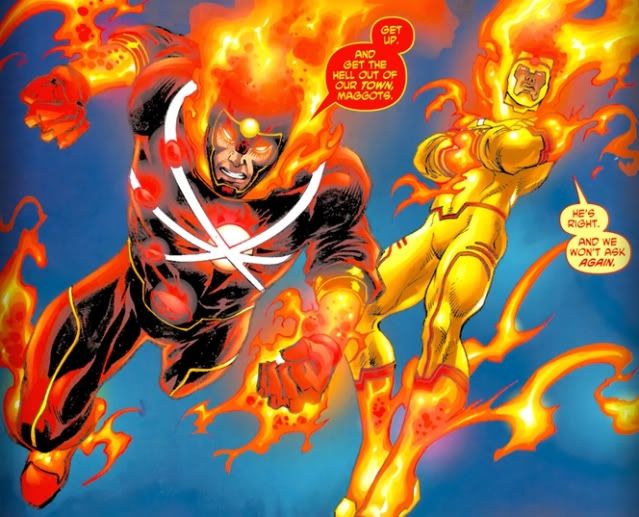
Perhaps someday Firestorm will be more than a simple superhero slugfest book.  Mind you, that was the limitation imposed on it by virtue of the New 52, where Blackest Night seemingly never happened, nor did Firestorm's entire history. The Fury of Firestorm series has read up to this issue #0 as "the superhuman weapon" motif gone weird, the Firestorm Protocols.  Captain Atom deals with the themes of the scope of his matter-manipulation powers, whereas Firestorm just apparently blows stuff up.  Firestorms, plural. Sorry.  

Major problems for this series include but are not limited to the flat characters, the seemingly pointless story arcs interrupted by seemingly pointless shock value explosions, often set at public landmarks and/or sporting events.  It may be that the series is geared towards action junkies that aren't looking for finesse or plot, but rudimentary structures set to give the flat randomly-motivated characters room to explain the things they're seeing as said things are seen, or spout cliche threats against people dressed just like them. The Fury of Firestorm: The Nuclear Man is garbled nonsense at its worst moments and regurgitated fight scenes at its best. The profundities and potential of the characters understanding their powers or having something more to them than simple reaction scenarios is never really explored for more than a moment. If the series is to survive, it needs to carry more emotional weight, or at least pretend it can. 

5/10


SPACE PUNISHER #3
Writer: 
Frank Tieri
Penciller: 
Mark Texeira


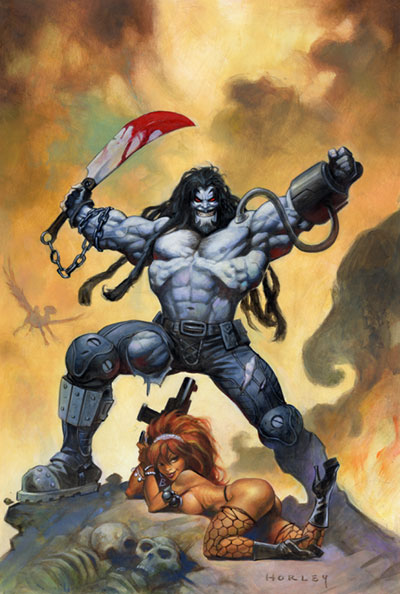
There's silly and then there's silly that knows how silly it is. On the heels of Deadpool Kills the Marvel Universe limited series comes a type akin in its major meta-style kookiness. Space Punisher, which is exactly what it sounds like. It's the Punisher. In space. This is that bit every Marvel fan speculated on at least once, where Frank Castle, armed with only a robot and space age weaponry, goes cosmic kill-ride with a list of most of the cosmic names of the Marvel Universe, along with variations of villains to murder memorably as he goes.  If you like over-the-top action thrill rides, senseless violence, and tentacle clone armies of Hitlers, heroes and characters warped between humor of Lobo and the no-nonsense ultraviolence of Judge Dredd, this piece of Marvel weird come to life lies somewhere in between.  In this almost-hilarious enterprise of an issue, Frank Castle gets closer and closer to his answers, and the Watchers that killed his family are in his sights. There's no need to think too hard about this one. It's a limited series, and it's fully aware of itself. The art is at times too spare, but overall it's a piece that can be spotted for what it is. Fun and action.

7.5/10


SUPERMAN #0
Written by: 
Scott Lobdell
Art by: 
Kenneth Rocafort
Cover by: 
Kenneth Rocafort
Variant Cover by: 
Kenneth Rocafort


In some ways, the dilemma of the DC stock of characters is wholly understandable. They see the need for constant revisionist history of storylines and events to fit the long-term goal of loyal readership.  With Superman we have the most difficult task of all, stripping away his acheivements and accolades and toning him from the level of Supergod to perhaps demigod.  Gone is his lawful perfect attitude towards all things, staggeringly high intelligence, and ultra-refined understanding of his powers.  

The New 52's Superman has been described as near-socialist in his stance as a hero. He fights against not just tsunamis and alien invasions, but government corruption, media bias, terrorist attacks and alien invasions. And tsunamis.  He's been taken down a few notches, save interesting portions of Action Comics and blips on the miasma of Superman as a title itself, where the old ideal shines through.  With Superman #0 we see his father's story, that is, Jor-El, studying the potential reasons for Krypton's imminent demise, which thanks to ham-fisted plot-tinkering would appear to have been arranged by someone of great power and influence.  The art for this particular issue is breath-taking, so much so that the sparsity of Krypton's culture in favor of a chase sequence conspiracy seems tolerable.  The final page raises whole new questions, and we are left with a potential storyline involving time-travel to unravel the secret conspiracy of why Krypton died (as apparently it's not just because Despair suggested it to Rao in Sandman: Endless Nights) and how that affects Earth's possible demise.     

8.5/10   


ULTIMATE COMICS ULTIMATES # 16
Writer: 
Samuel Ryan Humphries
Penciller (cover): 
Michael Komarck
Artist: 
Billy Tan


The past year or so of the Ultimate Universe has seen dramatic changes and bold decisions, mostly in the wake of Ultimate Spider Man's death.  Ultimate Reed Richards pretty much decimated Europe, killed almost all the Asgardian gods, went to war with a superhuman Asian army, and annihilated Washington D.C. will an antimatter bomb.  Texas immediately secedes. Meanwhile an Evangelical Christian bigot has co-opted an entire army of Nimrod Class Sentinels and declared major portions of the southwest as a sovereign territory, as well as calling for death to all mutants.  Who it turns out are human-made. So. Steve Rogers retires out of shame and this is what happens? What would happen if perhaps he was simply sworn in as president of the United States and rebuilt the nation through force of arms?  Ultimate Comics Ultimate #16 answers this question and a few others.  It's commendable enough that each Ultimate series and its Earth variant have moved further from and closer to the Earth 616 (latter being the surprisingly refreshing and tastefully done Spider-Men).  They piqued interest in what might very well have been a dud enterprise based on the lightning in a bottle that was Mark Millar's first pass at these alternate reality Avengers, certainly paving the way for works and multi-billion dollar movies to come.  Since the gradual phasing out of Jonathan Hickman for Sam Humphries, the title's dialogue has suffered somewhat in quality, but vestigal plot-devices linger on, leading to what may wind down into nonsense but for now keeps pace with the build-up that brought us to this point.

8/10


AQUAMAN #0
Written by: 
Geoff Johns
Art by: 
Ivan Reis
Joe Prado
Cover by: 
Ivan Reis
Joe Prado
Variant Cover by: 
Ivan Reis


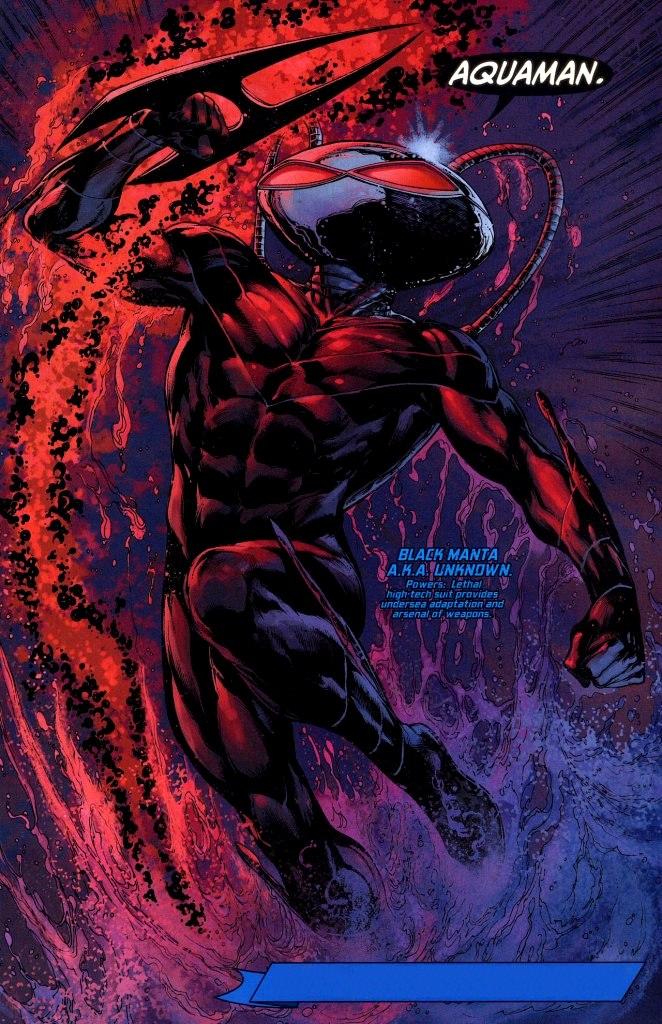
Admit it. Everyone thinks Aquaman is a joke.  The New 52 provides him a means to drop all the baggage of his history and start fresh.  So it is that with Aquaman #0 we see a story from his life where, prior to heroics, he's simply confused and angry about his questionable heritage and seeks out his first answers.  Under the sea.  In many ways the art of this series has been a major selling point, serving the story to such a great capacity that if it was a lesser artist would have killed the baby in its crib.  As things stand, Aquaman has come to a point where you can relearn his history without knowing the phases of "hand/not hand", "hook", "bionic hand", "sea god powers", "king/not king", "moody", "useless", "dead"... and reinforce his ongoing animosity with his half-brother Black Manta.  He's depicted too variably in what few other New 52 titles he's appeared in, but with this series, he's less out of his element, pun most certainly intended.  So long as they keep reminding people that the art sells the story in Aquaman and less the other way around, everything for this title should remain relatively kosher. Ha. Kosher. Get it? Alright.

8/10


X-TREME X-MEN #4
Writer: 
Greg Pak
Penciller (cover): 
Kalman Andrasofszky
Artist: 
Paco Diaz


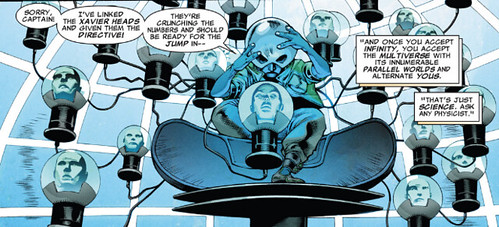
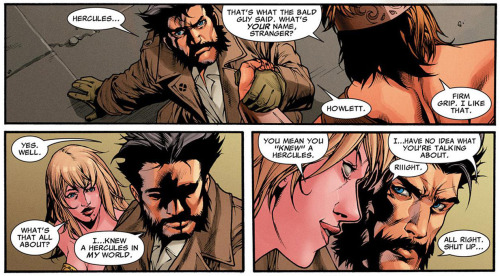
You'd be better off forgetting the Chris Claremont brain-child X-Treme X-Men that emerged from the sewers of Marvel around the same time as Grant Morrison's New X-Men.  The new title X-Treme X-Men follows a group of characters that first appeared in Astonishing X-Men, playing alt-reality foils to Lawful Neutral Cyclops in a reality where Charles Xavier is a bit of a dick-head. Then they reality hop, apparently along the lines of the little-loved but potentially fabulous Exiles series.  With X-Treme X-Men #4 the team, if in fact it can be called that, consists of a Charles Xavier head in a floating jar, James Howlett, Dazzler, and an alternate reality Nightcrawler (common since his death on Earth 616) and they team up to... well, it's hard to say. "Kill about a dozen evil Xaviers" fits, but it's an "episode to episode" scenario in many aspects, the true overarching goals unclear at a glance but hey, who cares?... Feels like the old series Exiles mixed with Sliders mixed with Quantum Leap, to an extent, and just like Exiles it's very mutant-heavy in all respects.  The art and the general "just go with it" attitude of the title overall save it from falling into the realm of being too snide or overly hokey.  If every two issues or so we get to see this reality-hopping crew have a random encounter or three, it should make for neat cover art at the very least.

8/10


RED LANTERNS #0
Written by: 
Peter Milligan
Art by: 
Ardian Syaf
Vicente Cifuentes
Cover by: 
Miguel A Sepulveda


Let's just say you don't want to be a jaywalker when the Manhunters decide to get feisty.  What has come as a pleasant surprise is that the title Red Lanterns has survived as long as it has.  It showed a strange sense of potential, twisted as that may at first seem.  Atrocitus, the first Red Lantern, provides explicit details of his motivations and origin with Red Lanterns #0.  Also, it turns out that he had relations with a demonic space squid, and learned the lessons of the Five Inversions, using their bodies to craft the Red Lantern battery in the first place.  These and other details are filled in that should prove of interest to both new and old fans of the Green Lantern stables of stories.  Overall, this issue shows the complications of a character you might expect in a Lantern whose primary motivator and power source is rage. Though not inherently evil, but more inherently brutal, the red end of the spectrum seems motivated by injustices rendered by figures of authority, and with the recent and blatant abuses of power rendered by the so-called Guardians of the Universe, along with the removal of Hal Jordan and Sinestro from the board, war is almost certain.  They'll be calling it the Rise of the Third Army.  This issue plants seeds for that and more, and although rushed in some spots and wordy in others, sports a certain confidence overall, which leads to a stronger fan base in the long run.

7.5/10


WOLVERINE #313
Writer: 
Jeph Loeb
Penciller: 
Simone Bianchi


This whole mess sucks. I'll get to this review when I am done wolveretching. God. Such a terrible taste in my mouth.

Really, how many times will Wolverine nearly kill Sabertooth?  Kids shelled out good money to see him decapitated once and for all, heck, there was a hardcover copy and everything. A clone killed Feral, is that what you're saying?  And this Romulus and Remus thing that we're led to believe was behind even what was behind the behind of Weapon X program?  

What's so effin' difficult about writing a Wolverine storyline? Sure, send him to hell, okay.  Let demons take over his body.  Then hem and haw over him dealing with the same tired pattern, maybe throw in a Gorilla detective for comedic relief, or gross everyone out with yet another hint at his mysterious past and shit, fine, you know what? Don't care.  Stopped caring. Wolverine should be dead from overexposure by now. He's impossible to kill by virtue of his popularity, okay, we get it, but you can write a story without it being about something fifty to four hundred other people have already done.  Mark Millar got it right, and that was ages ago.  Since his revelation of memory after M Day, we've had Wolverine run ragged joining the Avengers and becoming a headmaster of a new school and being featured in his usual six to ten guest star spots either subverting his classical image or tritely attempting to make it more shiny.

At the end of the day, this most recent plotline is to make us believe that Logan, James, whatever you want to call him may have volunteered for the Weapon X project, used to work for Romulus and Remus, and bladdah bladdah forget anything you knew before, let's change the ending to something besides a faked alien threat, yeah, let's make it, um, Dr. Manhattan bombing the world, sure, let's dumb down the whole thing like a Zach Snyder feature and end it with him kissing the hot immortal redhead or whatever, Christ, fine, do it.  Get Jeph Loeb to do this series forever, let him turn Wolverine into an actual wolverine. Yeah. Team him up with Liefeld and a team of cancer monkeys. It's over. I'm done with it. Wolverine's officially jumped the shark, folks. Nothing to see here.  

Art for the past few issues with this effrontery against all previous issues has been fantastic. That's it. That's all that's even remotely good about it.  Even then, to be honest, it just makes me nostalgic for old back issues of Heavy Metal. Let's strike these past three issues from the record. Bury them like E.T. the video game. 

4/10

Wednesday, May 30, 2012

Spoiler Reviews for Comics released May 30, 2012

Amazing Spiderman Annual #39 - 9/10
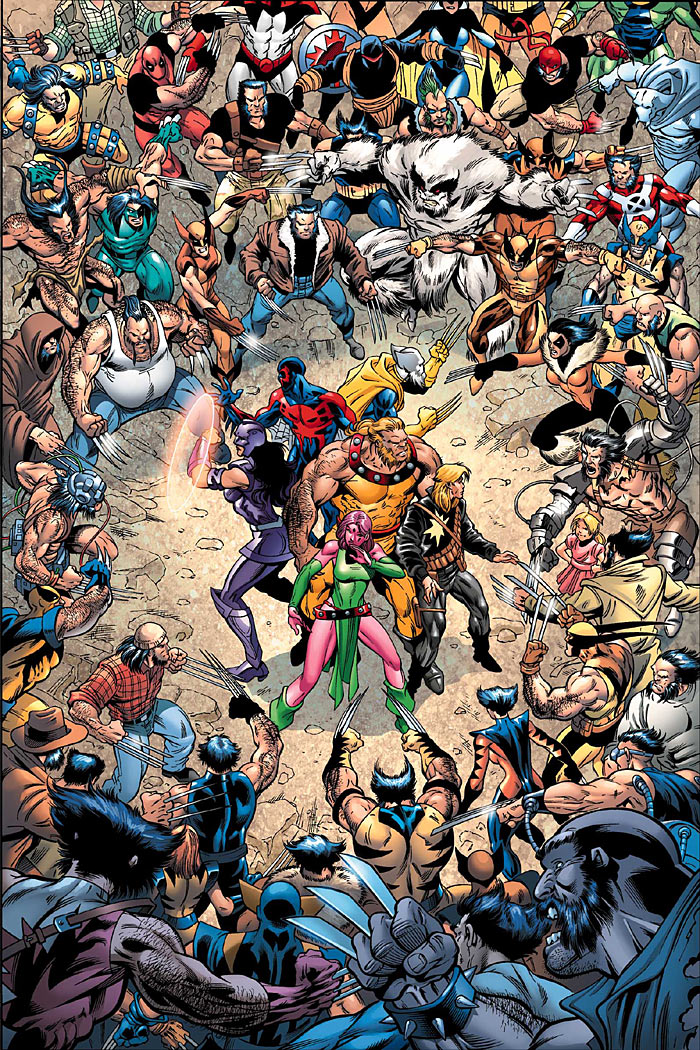
Writer Brian Reed has put good use of Spider-Man's current position in the Marvel Universe into play with this Annual.  Shunting the webhead out of time during a experiment in Horizon Labs with the all-too-innocent chubby scientist Grady, we catch a glimpse of what the world might look like without Spider-Man. Penciler Lee Garbett does a solid job in all respects, giving a friendly tone to a world that seems in some ways better off (Norman Osborne cures cancer, Mary Jane Watson is a superstar) and in others quite ordinary (Spider-Woman and the Avengers seem much the same).  What makes this issue stand out more than anything is the temporary return of Uncle Ben, who Peter Parker couldn't help but visit. If you want to pick up just one Spider-Man comic this year, this would be the one.  It's clutter-free despite the chronal catastrophe at the outset, and it fleshes out characters without attempting to go overboard.  Nearly perfect in execution, and so far as "the new status quo" goes, well-placed in continuity, and Reed has clearly done his homework regarding key points along the Spider-Man timeline, played up throughout.


Animal Man Annual 1 - 9/10

Ongoing series writer Jeff Lemire has been running with the same "Animal Man's family on the run from the Rot" story for nearly a year, and this Annual, the first for Animal Man's new series, fits into that, hinting at the upcoming team-up with Alec Holland, Swamp Thing and last knight of the Green.  The story stands on its own, in a fashion, being in great part a flashback to a team up between warriors of the Green and the Red to stave off The Rot. This Annual features glorious art by Timothy Green, whose alternation between sparsity and complexity of line-work suit the story quite well.  The mythology brewing in the "Vertigo import" titles of the New DCU, Swamp Thing and Animal Man, has been venturing into interesting new places, breaking ground for newer and older generations of readers to enjoy.  So far as intrigue goes, it has come to a point where the final battle or battles will have to match or exceed the build-up, as lengthy and pleasantly meandering as it has been.  This issue, a pause of reflection, in some respects, compounds that feeling.  Still gloriously done. Leaves the future for these characters wide open in terms of potential development.


BATMAN Annual #1 - 8/10


Mister Freeze has not warranted a decent reappraisal since Schwarzenegger turned him into a joke so many years ago.  This Batman Annual, however, written by Scott Snyder and James T Tynion IV with impressive art by Jason Fabok, pulls us into the character with an ease that some might not expect.  Tying into the "Night of the Owls" storyline wrapping up all the Batman related titles at the moment, Mr. Freeze breaks out of Arkham in a somewhat novel fashion, goes on a brutal rampage up to and including the semi-legitimate Penguin's casino (to get his freeze guns) and returns to his object of obsession, his precious Nora.  In previous continuity, this was rather straightforwardly (read: dully) played out as his wife.  There is now a twist, potentially coupled with details of his family background, that gives the demented tragedy of Mr. Freeze a deeper resonance than was previously thought possible.  At the end of the day, of course, this can only wrap up in a limited fashion, but the trip to the inevitable end has some good and even surprising moments along the way.


Star Trek The Next Generation/Doctor Who #1 - 9/10


Here we have a crossover that fans of both series should take a moment with, something quite unexpected but highly enjoyable.  With storywork by Scott Tipton, David Tipton, and Tony Lee, the cross-over starts out in the Star Trek Universe (are we to assume both universes are one and the same? If so, would Q and the Doctor have an interesting interaction or what? Perhaps later issues will clarify this.) where the Cybermen have teamed up with the Borg and are laying siege to planets, Starfleet seeming helpless to stop them. We're carried to the Doctor's universe (with Rory and Amy) where they are just wrapping up a lovely set-to with ancient Egyptians and alien scum in disguise. J.K. Woodward's arts and colors have a clean yet almost ethereal quality to them, somehow fitting.  We finish this issue in what is quite obviously the anachronistic setting of early twentieth century San Francisco a la Enterprise Holodeck.  There were a hundred ways in which this story could go wrong, but it has a strong finish and looks to be well paced.  Here's to the future, eh?


Supercrooks #3 - 8/10

These days, Mark Millar writes superhero stories that seem as punchy as a wide-screen cinematic experience.  One-liners and dramatic fights play out amongst characters that could easily have celebrity sit-ins.  The premise for this story, obvious from the get-go, is "Oceans Eleven starring supervillains" making that last big score to get their old mentor out of trouble with a casino owner.  Since his work on Superior, also with Millar, artist Lenil Yu seems determined to make his characters and settings as clean and crisp as is humanly possible, even when covered in muck and gore.  This issue is the one in which the titular super criminals case the joint, in this case a villa for a retired super-villain known as The Bastard. From start to finish it's text-book longing for cinematic pick-up.  With each page you can practically see Millarworld spin off emails to grubby producers, pitches lined with clips where some textured baddie is growling and chewing the scenery.  Let's just never make another movie like WANTED. Please.


Wolverine #307 - 7.5/10 
With story by Cullen Bunn and art by Paul Pelletier, this issue marks another chapter in an ongoing arc involving Wolverine tracking down Dr. Rot, a homicidal surgical villain lurking behind the scenes for nearly as long as Wolverine's interminably normal boring girlfriend.  She's been looking for Wolverine with the Feds, who think Logan, James, whatever, has been going on a rampage.  Well, this issue, we get to meet Dr. Rot's "extended family" (Wolvie mercy-killed the dad and disemboweled a "cousin" last issue)... who are supposed to pack the same punch as the Texas Chainsaw Massacre family, perhaps, but end up coming off ghoulishly unrealistic and flat.  When these second-tier blood encrusted yahoos manage to one-up Wolverine, lobotomize, brainwash, and give him a tour of their facilities, the reader, if not already numb, can pull out of the muck long enough to predict the final page, wherein Wolverine's girlfriend and the Feds are closing in on the Rot compound, and Rot gives Wolverine orders to kill them.  Let's predict next issue. Wolverine doesn't kill his girlfriend. He doesn't even manage to kill any of the Rot family.  Somehow these people, grossly brutal villains that he has let off the hook before, will be let off the hook again.  Then the next level of status quo will be eminently achieved when Wolverine's dull awful ethnically confusing girlfriend tells him he's not an animal, or something to that effect.  Dialogue's decent enough and some instances of old tropes replayed are even novel, but ultimately this gruesome tale can only be re-examined in so many ways.

Wednesday, May 16, 2012

X-Men Second Coming: or, The Meta that ate Itself

If you are going to discuss the X-Men war across America known as Second Coming, you will have to get Nightcrawler's death out of the way first.

Let's do it as glossy as possible. Great, thanks.


There, was that so bad?

In all seriousness, the first arc of the storyline focused on the supreme Nimrod-like Bastion and his gang of resurrected racists taking out the X-Men's resident teleporters.  Ariel, the Vanisher, and Illyana Rasputin fell before a jet missile, a hail of bullets, and an arcane banishment payload, respectively.  All of this due to the arrival of Hope from her junkyard future in the 31st century with Cable, of Liefeld ages gone past.

Bastion, being from the future, has insider information on Hope.  He knows what the end of Avengers vs. X-Men will be. He's also a mutant-hating robot with a mission to exterminate the mutant race.  He wants her dead because the x-gene will activate more if she is left alive.  The Gold Celestial's proximity to San Francisco is no coincidence.  Kurt teleports her there after Bastion puts his hand through him.

Not a dry eye in the house there, guys.


As we can see, the cost of messianic fervor is paid by the moral conscience.  Nightcrawler represented, in many respects, the team's heart. He held a relgio-spiritual status among a band of blatant outcasts. He internalized the weight and responsibility of a Catholic sense of morality.  Directly prior to his death he discovered that Cyclops had sanctioned a mutant hit-squad led by Wolverine, good old X-Force. Nightcrawler of course took issue with the blatant killing of innocent or helpless enemies, no matter how bad.  In the course of Second Coming, morals are continually compromised, and murder happens at an alarming rate.  A human supremacist begging Wolverine for his life is gutted.  X-23 pops a helpless man in the brain with her claws during interrogation.  Warlock is convinced by Doug Ramsey to steal the lifeglow of Cameron Hodge and his smiley face followers.  Archangel, having become dominant for Warren Worthington III, cuts people to pieces and never even changes expression.  

When this was first drawn on a bar napkin, it seemed cool. In 1986.


When I see all this mutant carnage I call to mind the old Chris Claremont era, where in one instance Wolverine gutted and nearly killed a confused Rachel Summers (Phoenix by proxy from parallel timeline) for wanting to murder mutant witch Selene for enslaving her.  Claremont wrote in an odd moral code for a man whose power is constant regeneration and unbreakable claws.  The X-Men of that era would often say "X-Men don't kill."  Once the ingratiating  and peaceful influence of Charles Xavier gave way, in recent years, to the crashpad of Magneto, that motto seems to have long gone by the wayside.  Since Scarlet Witch's heavy trip, Mutants are a desperate aberrant in the Marvel Universe once more, nowhere near the scope of evolutionary step predicted in Grant Morrison's Planet X.  

Foreshadowing, anyone? With red eyes, grr. We're tough, our eyes are all red. Grr, moral dubiety.


Throughout the X-Men's long standing career nigh coming on about forty some odd years now, they have undergone dramatic shifts of cast and presence of mind within the framework of what constitutes a story. When mutants bottomed out after the last reality warping schizophrenic lost their grip (felt like the subtle influence of Sublime behind the scenes), and relocated from the bombed-out Xavier estate and come correct with Magneto on Asteroid M turned mutant sanctuary Utopia. 

Seemed like so much recycling of old fears and worries for the same characters that once found themselves faced with a nightmarish Holocaust-level scenario.

For all the brightly colored spandex of the past we can see hints of mixing and matching old Claremont storylines in the midst of all this.  New Mutants meets Days of Future Past meets the myriad Sentinel hunts, the Master Mold of a dystopian tomorrow, personified in a brick wall plastered with those inefficient posters of dead mutants, disturbingly current in their appearances.  Which brings us to the idea of this whole storyline being metaClaremont.

The precise moment that this trope jumped the shark.


The Claremont era of X-Men has been the most fertile grounds for future storylines for decades now. To revisit that waterhole again and again compounds itself, as stories continue emerging from stories and characters develop and react throughout.  Once you've committed yourself to sending up or rooting out Claremont's old pastures, you're muddy with backstory.
Recent issues of the X-titles, leading up to and in fact catching its stride in Avengers vs. X-Men, have worked towards a new set of myths to create templates of arcs off of.  Easy examples come from the Morrison, Whedon, or even the fairly recent Fraction era, where new villains and challenges emerged, blended, and were ably handled.

In Second Coming, the other end of Messiah Complex, the refinement of new "big deal" Hope continues, as it will soon be coming to a head in current continuity, and we should take a moment to acknowledge other odd-run revamps being called forth in the war (everyone says the entire series run that it's a war), Professor X's schizophrenic son of an Israeli mother, Legion.  Legion did, some time back, spawn the Age of Apocalypse universe by accidentally killing his father when he went back in time to kill Magneto.  His imprisonment/rehabilitation in Utopia was played out in another alternate reality he spawned, The Age of X.  So when Professor X calls upon him to unleash his multiple personalities to defend San Francisco, it's an interesting throwback to remind Marvel readers that all powerful characters have ultrapowerful offspring (Scarlet Witch, Jamie Braddock, and Franklin Richards come to mind).      

Actually, pretty cool set up in your head. But that hair...


2011 was the year that all of 2012 X-continuuty and the Avengers vs. X-Men was laid out, with the return of Hope, sent to the 31st century with Cable, son of Cyclops and a clone of Jean Grey, who is dead but died at least three times, rose as a Phoenix and was killed again by a clone of Magneto run amok on mutant power enhancing drugs. But I digress. Hope is blatantly the forthcoming Phoenix by the end of this series, but I am going to appraise its overall structure and hope to make sense of the plot, which expects the reader to have kept reasonable pace with the story and all of Chris Claremont's run including the New Mutants, for the past ten to thirty years. Nimrods and Bastions and recycled plots via recycled characters via constant Resurrection countered by constant death. Officially, Professor X has also died at least three times, too.

The X-Men are the most ridiculously injured by and least affected by death in the Marvel Universe. The avatar of this odd trope is of course the nearly unkillable Wolverine. His ubiquitous nature in the Marvel Universe expresses this as well, as characters live, die, are ressurected by contrivance of plot, and Wolverine can outlive them all and fight the Hulk in the ashes of civilization.  In the Ultimate Universe, Logan, or James Howlett, actually, was mutant zero in the human creation of mutants through attempted weaponization of mutants via Weapon Plus, the outcropping of Captain America's super soldier program.

In any event, the plot plays itself out in various psychodramas that emerge from the team dynamic and whatever confrontation the team must face.  Second Coming, in all of its metaglory, is worth a reassessment after the final throws and lashes of Avengers vs. X-Men dies down.  In the meantime, see it as a (hopeful) last hurrah for direct sips of the Claremont pool, at least until other water sources, or better yet, a running river of fresh concepts can be located, perhaps even in as recent and well refined an example as Rick Remender's bizarrely perfect Dark Angel Saga.


And sometimes the foreshadowing is just like a mallet upside the head.


Tuesday, May 1, 2012

Second Impressions of Avengers vs. X-Men

Now that the first optic blast has been fired and the first American-flag-shield-related concussion has been dealt, we can explore and critique and tweak the orientation of Marvel Comic's most recent "company-wide" crossover, Avengers vs. X-Men.

Something tells me this will end up being two pages of characters for each team.


It starts, as with any good hero vs. hero brawl, with a differing of opinions and a misunderstanding. The so-called mutant messiah Hope has manifested the Phoenix force at the same time as it seems the firebird itself is flying directly to Earth, laying waste to planet after planet along the way.  Captain America and the Avengers wish to take Hope into protective custody, and show up on the shores of mutantkind's Utopia to take her.  Cyclops does not react well to this. Cyclops sends a previously written and sternly worded email to the world via Val Cooper when everything starts to go down.

Did you know that Magneto has the ability to count millions of metal thingies in a split second? Me neither. 

The initial fight is broken up between the main event book and several other titles.  We see Magneto fighting Iron Man (not the foregone conclusion you may think, since Tony Stark's superpower is cash mixed with genius) the everlovin' Benjamin J. Grimm, the Thing, squares off against Namor (hasn't happened in years, actually).  After a magnetic fastball special with Colossus, a Red Hulk oriented fight ensues. When Wolverine and Spiderman infiltrate Utopia to nab/kill Hope, she goes all Phoenix voice on them, flash-fries Wolverine like he's a chump, and leaves, running across the water of San Francisco Bay.  Precisely 3:45 PM Eastern Standard Time.


They'll place bets on the Planet Sin until it heads their way.


Overall the series so far ranges comfortably from writer to writer. At a certain point little factoids will spring up. Some annoying, others less so, and some actually amusing. The way it plays out calls to mind a certain cross-company crossover event from my younger days reading comics.  DC vs. Marvel Comics, headed by Ron Marz and Peter David, artwork from Dan Jurgens and Claudio Castellini.


Old school like Aztecs but new in other aspects.


I'd estimate that the younger generation of writers and artists were similarly impacted by that series, which was interactive insofar as you could vote for the characters to win, similar in some respects to DC's hotline to determine whether or not the Joker kills Jason Todd, the second Robin.  As in that series, the various legends of Marvel Comics Universe, the Avengers, the X-Men, going against one another, that can be a problem, logistically.  As writers and editors on such a title, you have to play it relatively safe with the characters, they're money makers more and more, but you also don't want to treat them with kid gloves and openly pander to audiences or whatever expectations have been thrown around.  The big blockbuster movie event this summer, at this point, is going to be The Avengers. So in this concurrent series where that movie's characters are implicated in the title, who do you really think is going to win? Or is there actually going to be a winner, officially?  The answers to these questions lie in the way that the different group "money pots" are interacted with on a regular basis.  Avengers and X-related titles both hold the lion's share of titles in Marvel, especially considering how many once-solo characters are now one one or in some cases many teams.


Funny how planetary histories are often only told to narrate their fiery destruction.

The Avengers have been dominating center stage since the Civil War, the power-death knell of most mutants coming in House of M, and their overall relevance, outside of Wolverine, being downgraded.  In the movie world, the rights to the X-Men films is still being held outside of Disney, the absorbing entity, the Tron Mickey, hence the stream of movies culminating in Joss Whedon's The Avengers.  So even the movie universe, contracts and negotiations, are reflected in the focus of the comic universe.  The Avengers will win the battle.  Iron Man left Magneto in space.  Thing beat Namor down.  Colossus demanded Red Hulk smash him when he nearly lost control of his "Juggernaut persona".  The most powerful member of the Avengers, Thor, is fighting a giant bird made of fire in space. Actually, the Secret Avengers contend with not just the Phoenix but are forced to set down onto Hala, home of the Kree, and deal with a Phoenix-resurrected Captain Marvel.

Asgardian God vs. Primal Fiery Force or: "Thor, c'mon. Seriously? No way."

Unless the revelation of the Phoenix that results in the giant golden Celestial standing in San Francisco's parks district finally, after long last, doing something, we can expect that Cyclops may, shock, discover he is right and wrong, that maybe the whole world is not to be destroyed, or mutantkind saved, but perhaps the constant resurrections of characters will finally end! Remember, the Phoenix is the force of Life and Death fused.  This means someone has to die, and guess what? It's not going to be an Avenger this time. Imagine a scorched Cyclops being cradled in Wolverine's arms, replayed in flashbacks for decades to come.  Picture Hope sacrificing herself to restart the mutant gene via the Phoenix Force.  Perhaps the Celestial, guarding the Celestial egg that Earth houses, fights the Phoenix. Or maybe that's only a thing in the Earth X universe, designate 9997.

Now, all the mutants not housed in Wolverine's school (Cyclops will visit there next issue of Wolverine and the X-Men) will be facing not just the Avengers, but also SHIELD and the US Military.  Sentinels? No.  Sentinels are terrorist weapons (and the most hackneyed X-plot in existence), and the terrorists of the Marvel Universe are so often children lately it's somewhat disturbing. The all-tween Hellfire Club is but one example.

Even though the Avengers will win, the X-Men, the ultimate underdogs, must win the moral fight.  The spirit fostered in Marvel at the start was that characters should possess a certain pathos that the reader could recognize.  Now we delve deeper, but only in certain books geared towards certain readers.  Otherwise the status quo must be maintained, to a degree, and the likability of a character is informed by one's nostalgia surrounding it or one's ability to relate to it.  Pulling a strip from Spider Man's double cross back in Civil War, we can expect Wolverine to flip sides, as Storm already has. What will push him to that point?  Will Jean Grey be resurrected? Will the Phoenix Egg featured in Here Comes Tomorrow be laid on the Blue Side of the Moon?

The new weeks will pass on, and fights between these titans will reach levels of hyperbole hardly espoused since the conflicts of characters from different companies.  But this is Marvel, pitting its best teams at odds with one another. What are the long term effects, if any?  Will it end in confused cringes like Secret Invasion? Or the range of rage comic expressions that sprang up after the finish of Fear Itself?

The series seems to want to pack the most into itself as possible, which works for a reader seeking more than twenty four splash pages and some badly characterized dialogue mixed with contrivances.  The idea behind this is a bit rushed, but the actual follow-through feels like it was a fun project to work on. Each cheesy line's also an opportunity, and this series should provide some doozies.  At this point, expect one turncoat in #3, a minor twist or two in #4, and a major twist in #5.  See you next Wednesday morning.