Click!

Showing posts with label The Avengers. Show all posts

Saturday, July 7, 2012

All-New Uncanny Impressions of Avengers vs. X-Men.


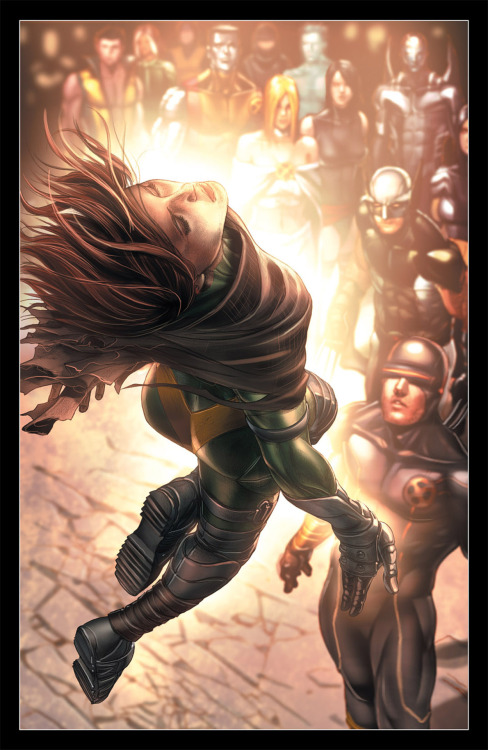
As discussed in prior installments, the megacrossover world shaker Avengers vs. X-Men is still in full gear, with the arrival of the Phoenix (and its subsequent fracturing) literally remaking the dynamic of the world as a whole.  Cyclops, Emma Frost, Colossus, Magik and Namor each share a fraction of the Phoenix's infinite energy (call them the Phoenix Five), and rather than prove the Avengers right (that is, destroy the world), they issue a declaration of Pax Utopia. The entire world receives free energy, ample food, clean water, and the annihilation of weapons of mass destruction. All military conflicts come to a halt. Deserts are irrigated. Sentinels are annihilated.  Food is plentiful.  The status quo so firmly established as a matter of course in the Marvel Universe 616 is deviated from strongly, and ably, thanks in no small part to the squad of extremely talented writers collaborating on this particular blockbuster.   

The various tie-in titles do a fairly good service to not upsetting the dynamic of reality and accenting the storyline (unlike, say, the truncated battle sequence depicted in "brawl title" AvX between Captain America and Gambit).  We see Emma Frost come into opposition with Avengers Academy, Rachel Summers (formerly Phoenix in her own right) calling her loyalty to the new world order into question, and Rogue scuffling with Ms. Marvel, who sows the seeds of doubt before being tossed into a Limbo prison.  Magneto serves as a John the Baptist.  Hope Summers trains in a mystical cityspace with the masters of Iron Fist and takes lessons from Spider-Man to prepare for confronting the Phoenix once more.


This twist has taken the Marvel Universe in a new and interesting direction and polarized fans in a fashion that simple slugfests never could.  Do you believe that the Phoenix Five's intentions are as pure as they seem, and that true peace can be established in a world where garishly costumed superhumans shatter concrete with wrist flicks?  Do you agree with the Avengers that such drastic changes always come with a cost, a backlash is inevitable, and that the more these mutants embrace their new powers, the more distant they will become from their core codes of morality?

There is also the notable issue of the Scarlet Witch at hand as well.  Her role in House of M (remaking the entire world to be one where everyone gets their heart's desire in a Magneto-run "utopia") has apparently been redeemed since, well, since for some reason every single Avenger has forgotten how badly she upset them and how dangerous her powers are, and oh yeah, she dismissed an entire race of beings with a fragment of a sentence.  Perhaps it's because she slept with Hawkeye that she gets a free pass.  It could also be that she alone seems capable of taking the Phoenix Five to task, and her connection to the Life Force (as established in Young Avengers: the Children's Crusade) is that common bond with the Phoenix that may prove interesting in the upcoming remaking of reality itself, not just the world, in a recently announced universal relaunch called Marvel: Now!


In more recent issues of the main title, we see the stark divide between the forces and note that the grey area (ha! as in, um, Jean) is vast on both sides.  In the most recent issue, Emma Frost nearly kills Hawkeye in a fit of anger (but don't worry, he's getting his own series soon, plus he'll completely forgive her once they have sex).  Internal strife among the Five will no doubt disassemble them (and Colossus is still the Juggernaut, in case you were curious). Charles Xavier's marginalization continues to expand and contract.  Captain America seems to have a born soldier's need for constant battle, his irrelevance in a world of perpetual peace perhaps an unspoken catalyst to his continually antagonizing the Phoenix Five.  Iron Fist's established ret-conned history with the Phoenix Force will grant him a +5 to his relevance.  Then again, maybe everything that's happened for the past ten-plus years in Marvel is about to be erased.  Or perhaps Hickman will simply set the Avengers out to "solve everything".

In terms of scripting duties, it's very interesting to note the emergent variations of style with each issue, and as every section of the story unfolds, the shift in artists seems fitting to the content.  Marvel, all foibles and wisecracks aside, is clearly bringing their A game.  Regardless of the final outcome, readers that have cared for and enjoyed each of the titular teams involved in this conflict are in capable hands.

What comes next, however, remains to be seen.  After years of established wetworks, continuity and character building, a relaunch (restart? reboot? revamp? remake?) of the Marvel Universe titles (Marvel NOW! NOW! NOW!) may cause fans to cry foul, or even worse, call "mimic", since as most comic readers are well aware, about a year ago the DC Universe erased its elaborately decorated chalkboard and started fresh (but in some spots shaky) with The New 52.

Regardless of outcome, the story continues to be intriguing and this reviewer, for one, will continue to buy it, if only to see where the trail leads.  If the end result proves ridiculous, then the purifying flame of my caustic wit will burn it away.


Wednesday, May 16, 2012

X-Men Second Coming: or, The Meta that ate Itself

If you are going to discuss the X-Men war across America known as Second Coming, you will have to get Nightcrawler's death out of the way first.

Let's do it as glossy as possible. Great, thanks.


There, was that so bad?

In all seriousness, the first arc of the storyline focused on the supreme Nimrod-like Bastion and his gang of resurrected racists taking out the X-Men's resident teleporters.  Ariel, the Vanisher, and Illyana Rasputin fell before a jet missile, a hail of bullets, and an arcane banishment payload, respectively.  All of this due to the arrival of Hope from her junkyard future in the 31st century with Cable, of Liefeld ages gone past.

Bastion, being from the future, has insider information on Hope.  He knows what the end of Avengers vs. X-Men will be. He's also a mutant-hating robot with a mission to exterminate the mutant race.  He wants her dead because the x-gene will activate more if she is left alive.  The Gold Celestial's proximity to San Francisco is no coincidence.  Kurt teleports her there after Bastion puts his hand through him.

Not a dry eye in the house there, guys.


As we can see, the cost of messianic fervor is paid by the moral conscience.  Nightcrawler represented, in many respects, the team's heart. He held a relgio-spiritual status among a band of blatant outcasts. He internalized the weight and responsibility of a Catholic sense of morality.  Directly prior to his death he discovered that Cyclops had sanctioned a mutant hit-squad led by Wolverine, good old X-Force. Nightcrawler of course took issue with the blatant killing of innocent or helpless enemies, no matter how bad.  In the course of Second Coming, morals are continually compromised, and murder happens at an alarming rate.  A human supremacist begging Wolverine for his life is gutted.  X-23 pops a helpless man in the brain with her claws during interrogation.  Warlock is convinced by Doug Ramsey to steal the lifeglow of Cameron Hodge and his smiley face followers.  Archangel, having become dominant for Warren Worthington III, cuts people to pieces and never even changes expression.  

When this was first drawn on a bar napkin, it seemed cool. In 1986.


When I see all this mutant carnage I call to mind the old Chris Claremont era, where in one instance Wolverine gutted and nearly killed a confused Rachel Summers (Phoenix by proxy from parallel timeline) for wanting to murder mutant witch Selene for enslaving her.  Claremont wrote in an odd moral code for a man whose power is constant regeneration and unbreakable claws.  The X-Men of that era would often say "X-Men don't kill."  Once the ingratiating  and peaceful influence of Charles Xavier gave way, in recent years, to the crashpad of Magneto, that motto seems to have long gone by the wayside.  Since Scarlet Witch's heavy trip, Mutants are a desperate aberrant in the Marvel Universe once more, nowhere near the scope of evolutionary step predicted in Grant Morrison's Planet X.  

Foreshadowing, anyone? With red eyes, grr. We're tough, our eyes are all red. Grr, moral dubiety.


Throughout the X-Men's long standing career nigh coming on about forty some odd years now, they have undergone dramatic shifts of cast and presence of mind within the framework of what constitutes a story. When mutants bottomed out after the last reality warping schizophrenic lost their grip (felt like the subtle influence of Sublime behind the scenes), and relocated from the bombed-out Xavier estate and come correct with Magneto on Asteroid M turned mutant sanctuary Utopia. 

Seemed like so much recycling of old fears and worries for the same characters that once found themselves faced with a nightmarish Holocaust-level scenario.

For all the brightly colored spandex of the past we can see hints of mixing and matching old Claremont storylines in the midst of all this.  New Mutants meets Days of Future Past meets the myriad Sentinel hunts, the Master Mold of a dystopian tomorrow, personified in a brick wall plastered with those inefficient posters of dead mutants, disturbingly current in their appearances.  Which brings us to the idea of this whole storyline being metaClaremont.

The precise moment that this trope jumped the shark.


The Claremont era of X-Men has been the most fertile grounds for future storylines for decades now. To revisit that waterhole again and again compounds itself, as stories continue emerging from stories and characters develop and react throughout.  Once you've committed yourself to sending up or rooting out Claremont's old pastures, you're muddy with backstory.
Recent issues of the X-titles, leading up to and in fact catching its stride in Avengers vs. X-Men, have worked towards a new set of myths to create templates of arcs off of.  Easy examples come from the Morrison, Whedon, or even the fairly recent Fraction era, where new villains and challenges emerged, blended, and were ably handled.

In Second Coming, the other end of Messiah Complex, the refinement of new "big deal" Hope continues, as it will soon be coming to a head in current continuity, and we should take a moment to acknowledge other odd-run revamps being called forth in the war (everyone says the entire series run that it's a war), Professor X's schizophrenic son of an Israeli mother, Legion.  Legion did, some time back, spawn the Age of Apocalypse universe by accidentally killing his father when he went back in time to kill Magneto.  His imprisonment/rehabilitation in Utopia was played out in another alternate reality he spawned, The Age of X.  So when Professor X calls upon him to unleash his multiple personalities to defend San Francisco, it's an interesting throwback to remind Marvel readers that all powerful characters have ultrapowerful offspring (Scarlet Witch, Jamie Braddock, and Franklin Richards come to mind).      

Actually, pretty cool set up in your head. But that hair...


2011 was the year that all of 2012 X-continuuty and the Avengers vs. X-Men was laid out, with the return of Hope, sent to the 31st century with Cable, son of Cyclops and a clone of Jean Grey, who is dead but died at least three times, rose as a Phoenix and was killed again by a clone of Magneto run amok on mutant power enhancing drugs. But I digress. Hope is blatantly the forthcoming Phoenix by the end of this series, but I am going to appraise its overall structure and hope to make sense of the plot, which expects the reader to have kept reasonable pace with the story and all of Chris Claremont's run including the New Mutants, for the past ten to thirty years. Nimrods and Bastions and recycled plots via recycled characters via constant Resurrection countered by constant death. Officially, Professor X has also died at least three times, too.

The X-Men are the most ridiculously injured by and least affected by death in the Marvel Universe. The avatar of this odd trope is of course the nearly unkillable Wolverine. His ubiquitous nature in the Marvel Universe expresses this as well, as characters live, die, are ressurected by contrivance of plot, and Wolverine can outlive them all and fight the Hulk in the ashes of civilization.  In the Ultimate Universe, Logan, or James Howlett, actually, was mutant zero in the human creation of mutants through attempted weaponization of mutants via Weapon Plus, the outcropping of Captain America's super soldier program.

In any event, the plot plays itself out in various psychodramas that emerge from the team dynamic and whatever confrontation the team must face.  Second Coming, in all of its metaglory, is worth a reassessment after the final throws and lashes of Avengers vs. X-Men dies down.  In the meantime, see it as a (hopeful) last hurrah for direct sips of the Claremont pool, at least until other water sources, or better yet, a running river of fresh concepts can be located, perhaps even in as recent and well refined an example as Rick Remender's bizarrely perfect Dark Angel Saga.


And sometimes the foreshadowing is just like a mallet upside the head.


Friday, May 4, 2012

15 hour Avengers Party.


The idea was simple.  For twenty American dollars plus tax apiece, Mr. So and I would partake of fifteen hours of comic book movies.  The offer stood as Iron Man, The Incredible Hulk, Iron Man 2, Thor, Captain America, and finally, at midnight, the long-anticipated Avengers (in 3D), written and directed by this summer's cinema success story, Joss Whedon.

I got this swag.


When the first film (Iron Man) ends, a sweaty female attendant with a broken voice informs the theater that parking will only be validated for four hours.  A mild panic rises in the crowd when a rumor passes around that the show is going to exclude The Avengers itself. A quick check on the cell phone confirms the film is indeed playing.  Calm returns.

The crowd consists of much as you might expect: largely male population, with standard skinny bespectacled nerds, geeks that choose to wear their Captain America hoodies or thrift-store condition Avengers t-shirts (thus being the guy at the concert that's wearing the t-shirt of the band that's playing at the concert), a handful of stoner stereotypes, dorks that bred and brought their precocious children, and of course, samples of America's grossly obese, providing the sour milk fat flesh fold smell that over the course of the day sinks into the theater like scared-skunk stink.  Swag in the form of buttons and posters are passed out.

We're all sold on it.


What's not to like?


Admittedly, the only movies of the bunch that I go into the event having already seen are the Iron Man films, due in one part due to an odd affection for Jon Favreau, in another part because of an active attempt to avoid the genre of superheroes as much as humanly possible.  So often one gets burned. Ask anyone that has ever seen Spider Man 3.  In the cocaine-fueled executive rage for commercial success, many comic book adaptations could easily be viewed as escapism done wrong, a less refined, mostly immature attempt at pandering to the lowest common denominator, resulting in critical flip-floppers.

Most of all what I never enjoyed was the preening sense of inevitability concerning militarism that the Marvel franchise seems to endorse in each film it makes, while simultaneously (and only sometimes) pretending it does the opposite.

The Edward Norton version of Hulk doubles down on the concept of military run amok to the point of absurdity, blowing up a college campus with no accountability, while the Thor movie mythologizes it with a sanitized and shiny Asgard run by Anthony Hopkin's master Kenneth Branaugh (and in this you could extrapolate Thor being the brutish America proxy, Loki being the snotty British Gog, and the entire Middle East as a frosted mirror-glass land of the Frost Giants).

This uneasy feeling of being sold a toy of the military industrial complex is reinforced as we are treated to the same opening sequence of commercials six times at the event.  An ad for the Navy, an ad for the Navy-sponsored boardgame-turned-film Battleship, an ad for the same film, this time sponsored by Coke Zero, an ad for the Marines, an ad for the Hatfields vs. the McCoys on TNT (Kevin Costner in a bloodfeud), an ad for the new remake of Dallas (the words BLOOD and FEUD and BATTLEGROUND flash on the screen, almost subliminal), then a review of each preview, plus an oddly racist Ultrabook ad.  All of that, six times over.


Imagine an army of Purple Hulks.


So the twelve hours and five movies pass, with twenty minute breaks between films, and we devour the food we snuck in, sip on caffeinated beverages loaded with vitamin B and Guarna and Taurine, and I can feel myself becoming accustomed to the changing eye-patches of Nick Fury in each post-credits teaser, and I can see that the people involved are attempting to make something more than a two hour long advertisement for the military industrial complex, but at the end of the day, they're stuck in a system they never named, but were made by, much as in the Captain America movie, where after being dosed as a super-soldier, he spends the first stretch of his career spinning propaganda on the newsies.

When a true subliminal flashes after the word "compassion" at a certain point (Thor, I believe), I recall the recent Star Trek remake, where James T. Kirk's older father-proxy tries to convince him to join Star Fleet after a bar fight. I flash across the crass, commercialized, and crypto-fascist overtones of 300 and the Transformers franchise.  Michael Bay conditioning pods.  Though certain elements of Captain America call to mind the best elements of Star Wars as well as the quality of film making from the era it depicts.  Captain America is the best, most refined of the Marvel movies leading into The Avengers.

About midway through The Avengers, when the S.H.I.E.L.D Hellicarrier raises out of the ocean, I find myself compelled to join the Navy, for some reason.

I also find myself cheering with the crowd around me.


The Avengers, it should be said, calls forth all the elements of a comic book superhero team, and paces them in an order that should be just complex enough to satisfy critics and just simplistic enough to appease brohams.  It's a crowd pleaser. It will break box-office barriers.  I love comics. I know comics.  My conscious attempts at avoiding comic book movies came after a dissatisfaction borne out of constant disappointment.

The Avengers gets it right, in a big way.

[Perhaps that lengthy an exposure to such materials was never intended for public consumption. Perhaps I have overdosed.  I need to start a blood feud, right after I join the Navy.]

I'll admit, all of my resistances were worn down to some degree in the twelve hours leading up to The Avengers, but this is a first rate A+ film for being a comedy, an action movie, and a superhero movie that puts all others to shame.

The Tesseract (which sounds better than Cosmic Cube, perhaps) is our movie's objective correlative, first introduced in Captain America, a limitless power source, and a source of interest for the villain Loki and his unnamed benefactor Thanos (who we only see in the first of two post-credits scenes).

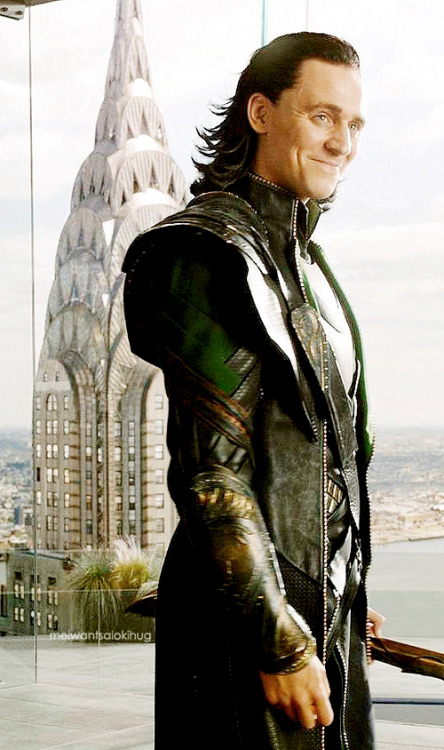
The entire film, I wanted Samuel L. Jackson, playing Nick Fury, to start screaming a litany of curse words, out of nowhere.  SHIELD Agent Phil Coulson (calling to mind Charles Colson) played by Clark Gregg, is the thread running from Iron Man through the rest of the films and on up into The Avengers, where he plays the part of Captain America's biggest fan and, later on, "the avenged".  Scarlett Johansson manages to explain why Black Widow is essential to the team dynamic by being the world's best interrogator.  Jeremy Renner as Hawkeye gets only a few spots to shine in the film, but he uses them effectively.  Bruce Banner is played for the first time by Mark Ruffalo, who does a bang-up job playing the eccentric gamma-irradiated scientist.  Better by far than any previous actor that filled the role, if you want to come down to it.  Tom Hiddleston is the core of the movie as Loki, and in the final analysis is one of the best actors in the film.  Something about Chris Hemsworth as Thor strikes me as a little too simple. Maybe that's the point. He has a good laugh for Thor, it's just that he walks with just the wrong degree of swagger to pull off "god of thunder", in my humble opinion.  Chris Evans, on the other hand, manages to sell Captain America's soldier boy appeal effortlessly, and of course, Robert Downey Jr. embodies Tony Stark to the extent that at certain points it doesn't feel like he's bothered to read the script, he's just channeling a genius billionaire philanthropist from a parallel reality.

Part of what can tell you how good a band is is how well the audience responds to their performance. By that measure, and given that the entire theater withstood fifteen hours of cinema for The Avengers, the movie is a rousing success. Big laughs from the audience.  Spontaneous applause. Bigger action.

Joss Whedon has proven something great about himself this summer.  He's the current nerd king of Hollywood, and we shall all bask in his light until the cycle of cinema degenerates again, in a new flashier more gimmicky Tour de France.

I want to give him a firm handshake for a job well done, right after I sign up for basic training.