Click!

Showing posts with label review. Show all posts

Friday, May 4, 2012

15 hour Avengers Party.


The idea was simple.  For twenty American dollars plus tax apiece, Mr. So and I would partake of fifteen hours of comic book movies.  The offer stood as Iron Man, The Incredible Hulk, Iron Man 2, Thor, Captain America, and finally, at midnight, the long-anticipated Avengers (in 3D), written and directed by this summer's cinema success story, Joss Whedon.

I got this swag.


When the first film (Iron Man) ends, a sweaty female attendant with a broken voice informs the theater that parking will only be validated for four hours.  A mild panic rises in the crowd when a rumor passes around that the show is going to exclude The Avengers itself. A quick check on the cell phone confirms the film is indeed playing.  Calm returns.

The crowd consists of much as you might expect: largely male population, with standard skinny bespectacled nerds, geeks that choose to wear their Captain America hoodies or thrift-store condition Avengers t-shirts (thus being the guy at the concert that's wearing the t-shirt of the band that's playing at the concert), a handful of stoner stereotypes, dorks that bred and brought their precocious children, and of course, samples of America's grossly obese, providing the sour milk fat flesh fold smell that over the course of the day sinks into the theater like scared-skunk stink.  Swag in the form of buttons and posters are passed out.

We're all sold on it.


What's not to like?


Admittedly, the only movies of the bunch that I go into the event having already seen are the Iron Man films, due in one part due to an odd affection for Jon Favreau, in another part because of an active attempt to avoid the genre of superheroes as much as humanly possible.  So often one gets burned. Ask anyone that has ever seen Spider Man 3.  In the cocaine-fueled executive rage for commercial success, many comic book adaptations could easily be viewed as escapism done wrong, a less refined, mostly immature attempt at pandering to the lowest common denominator, resulting in critical flip-floppers.

Most of all what I never enjoyed was the preening sense of inevitability concerning militarism that the Marvel franchise seems to endorse in each film it makes, while simultaneously (and only sometimes) pretending it does the opposite.

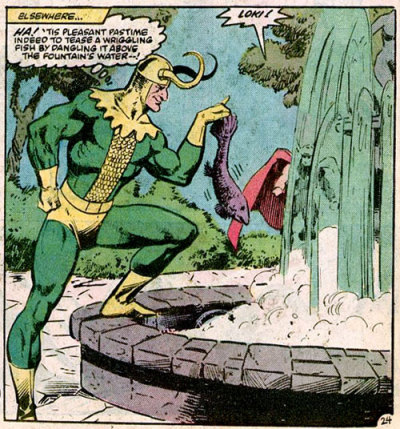
The Edward Norton version of Hulk doubles down on the concept of military run amok to the point of absurdity, blowing up a college campus with no accountability, while the Thor movie mythologizes it with a sanitized and shiny Asgard run by Anthony Hopkin's master Kenneth Branaugh (and in this you could extrapolate Thor being the brutish America proxy, Loki being the snotty British Gog, and the entire Middle East as a frosted mirror-glass land of the Frost Giants).

This uneasy feeling of being sold a toy of the military industrial complex is reinforced as we are treated to the same opening sequence of commercials six times at the event.  An ad for the Navy, an ad for the Navy-sponsored boardgame-turned-film Battleship, an ad for the same film, this time sponsored by Coke Zero, an ad for the Marines, an ad for the Hatfields vs. the McCoys on TNT (Kevin Costner in a bloodfeud), an ad for the new remake of Dallas (the words BLOOD and FEUD and BATTLEGROUND flash on the screen, almost subliminal), then a review of each preview, plus an oddly racist Ultrabook ad.  All of that, six times over.


Imagine an army of Purple Hulks.


So the twelve hours and five movies pass, with twenty minute breaks between films, and we devour the food we snuck in, sip on caffeinated beverages loaded with vitamin B and Guarna and Taurine, and I can feel myself becoming accustomed to the changing eye-patches of Nick Fury in each post-credits teaser, and I can see that the people involved are attempting to make something more than a two hour long advertisement for the military industrial complex, but at the end of the day, they're stuck in a system they never named, but were made by, much as in the Captain America movie, where after being dosed as a super-soldier, he spends the first stretch of his career spinning propaganda on the newsies.

When a true subliminal flashes after the word "compassion" at a certain point (Thor, I believe), I recall the recent Star Trek remake, where James T. Kirk's older father-proxy tries to convince him to join Star Fleet after a bar fight. I flash across the crass, commercialized, and crypto-fascist overtones of 300 and the Transformers franchise.  Michael Bay conditioning pods.  Though certain elements of Captain America call to mind the best elements of Star Wars as well as the quality of film making from the era it depicts.  Captain America is the best, most refined of the Marvel movies leading into The Avengers.

About midway through The Avengers, when the S.H.I.E.L.D Hellicarrier raises out of the ocean, I find myself compelled to join the Navy, for some reason.

I also find myself cheering with the crowd around me.


The Avengers, it should be said, calls forth all the elements of a comic book superhero team, and paces them in an order that should be just complex enough to satisfy critics and just simplistic enough to appease brohams.  It's a crowd pleaser. It will break box-office barriers.  I love comics. I know comics.  My conscious attempts at avoiding comic book movies came after a dissatisfaction borne out of constant disappointment.

The Avengers gets it right, in a big way.

[Perhaps that lengthy an exposure to such materials was never intended for public consumption. Perhaps I have overdosed.  I need to start a blood feud, right after I join the Navy.]

I'll admit, all of my resistances were worn down to some degree in the twelve hours leading up to The Avengers, but this is a first rate A+ film for being a comedy, an action movie, and a superhero movie that puts all others to shame.

The Tesseract (which sounds better than Cosmic Cube, perhaps) is our movie's objective correlative, first introduced in Captain America, a limitless power source, and a source of interest for the villain Loki and his unnamed benefactor Thanos (who we only see in the first of two post-credits scenes).

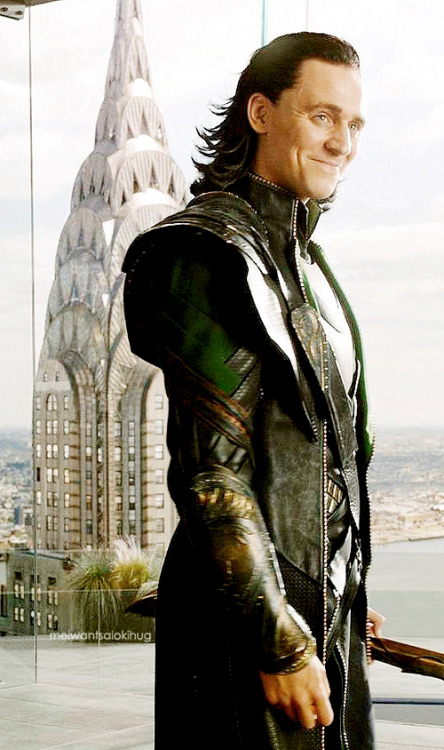
The entire film, I wanted Samuel L. Jackson, playing Nick Fury, to start screaming a litany of curse words, out of nowhere.  SHIELD Agent Phil Coulson (calling to mind Charles Colson) played by Clark Gregg, is the thread running from Iron Man through the rest of the films and on up into The Avengers, where he plays the part of Captain America's biggest fan and, later on, "the avenged".  Scarlett Johansson manages to explain why Black Widow is essential to the team dynamic by being the world's best interrogator.  Jeremy Renner as Hawkeye gets only a few spots to shine in the film, but he uses them effectively.  Bruce Banner is played for the first time by Mark Ruffalo, who does a bang-up job playing the eccentric gamma-irradiated scientist.  Better by far than any previous actor that filled the role, if you want to come down to it.  Tom Hiddleston is the core of the movie as Loki, and in the final analysis is one of the best actors in the film.  Something about Chris Hemsworth as Thor strikes me as a little too simple. Maybe that's the point. He has a good laugh for Thor, it's just that he walks with just the wrong degree of swagger to pull off "god of thunder", in my humble opinion.  Chris Evans, on the other hand, manages to sell Captain America's soldier boy appeal effortlessly, and of course, Robert Downey Jr. embodies Tony Stark to the extent that at certain points it doesn't feel like he's bothered to read the script, he's just channeling a genius billionaire philanthropist from a parallel reality.

Part of what can tell you how good a band is is how well the audience responds to their performance. By that measure, and given that the entire theater withstood fifteen hours of cinema for The Avengers, the movie is a rousing success. Big laughs from the audience.  Spontaneous applause. Bigger action.

Joss Whedon has proven something great about himself this summer.  He's the current nerd king of Hollywood, and we shall all bask in his light until the cycle of cinema degenerates again, in a new flashier more gimmicky Tour de France.

I want to give him a firm handshake for a job well done, right after I sign up for basic training.

Wednesday, April 25, 2012

Spoiler Reviews of Comics released April 25th, 2012

Ultimate Comics Ultimates 9:  10/10


The Marvel Universe's more movie-like parallel dimension known as the Ultimate Universe (designate 1610) has recently undergone radical shifts. Since most mutants were put in special holding camps and poor Spider Man died, you'd think the world of heroes would get a breather. Instead, things just seem to get progressively more desperate and fast paced.  First, it turns out that in Earth 1610 the American government created mutants, and Wolverine was patient zero. When a Southeast Asian republic does some superhuman tinkering of their own, superhumans known as the People arise. Housed in the Eternal City of Tian, a concept arising from Warren Ellis' run on Astonishing X-Men, these peaceable beings are ruled by Zorn and Xorn, the equivalent of humanoid black hole and sun, respectively. Meanwhile, the return of a severely twisted Reed Richards hearkens the destruction of ALL ASGARDIAN GODS BUT THOR, the creation of The City and the Children of Tomorrow.  With Captain America quitting, Iron Man's brain cancer getting worse, and Thor de-powered, things for the Ultimates do not look their best, especially since the evil Reed Richards has a thousand years of evolution on his side. The President of the United States sends The Hulk into The City to destroy it, then follows that up with every nuclear weapon in the country's arsenal.  To be fair, The City HAD absorbed most of Europe.  Issue 9 of Ultimate Comics Ultimates gives us a confrontation between the Children and the People, as well as Reed Richard's counterstrike.   Jonathan Hickman's genius storytelling and Esad Ribic's beautiful artwork are complimented by some of the industry's very best color work, courtesy of Dean White.


Let's review: Reed Richards has now killed all Asgardian gods AND America.


FF 17: 9.5/10


In recent issues of Fantastic Four, and the captivating spin-off, FF, we've seen a storyline that burned slow and then white hot.  In a last stand protecting a gate from the hordes of the Negative Zone, Johnny Storm, the Human Torch, was killed.  Using um, special worms, the villain Annihilus resurrected him and set him to work as a gladiator slave.  He earned the respect of the Inhuman Light Brigade and saved the planet from a Kree invasion upon his return, thanks to his brand new cosmic control rod stolen from Annihilus. Now, the day is saved. With this issue of FF, we find that he's moved in with his replacement on the Fantastic Four, none other than Peter Parker, Spider Man.  This issue is a welcome comedic relief from the vast, extensive, and compelling storylines that have been a mainstay in FF almost since the beginning of the series, originally feeling like a tangential overflow for Hickman's ideas.  The idea of Peter Parker and Johnny Storm being roommates is the first truly good thing to come about as a direct result of retconning Peter's marriage to Mary Jane out of existence.  She makes an appearance this issue, actually.  As usual, Jonathan Hickman's script is a masterpiece with each page, and Nick Dragotta's powers with a pencil give perfect expression to this comic.  Just... be careful with the last page. It'll get you.
It's official. Peter Parker getting Inhuman tongue action is a win.


Green Lantern: New Guardians 8: 8.5/10


This issue of New Guardians seems to be a meeting point for all of DC's Lantern book plotlines.  Since Sinestro and Hal Jordan recently wiped out the Yellow Lanterns in Green Lantern, and it seems as if the Guardians of the Universe are burning emotionless evil schemes at both ends by promoting Guy Gardener in Green Lantern Corps, GL:NG seems to be the side-quest that could become a forerunner for grander things.  This issue splits between Yellow Corpsman Arkillo's discovery of Sinestro's betrayal and the other Lantern's various allegiances and drives as they prepare to fight the Orange Lantern Larfleeze for a cosmic angel that stomped them all last issue.  The series shows great promise, but occasionally, with so many balls in the air, the reader might lose their way.  Fortunately, if you're bothering to read this series in the first place, you're either a Kyle Rayner fan or a big Lantern series buff already.  In either of those cases, this series will serve you well.  Tony Bedard and Tyler Kirkham make an excellent team, as ever.


Justice League Dark 8: 8/10 &  I, Vampire 8:  9/10


Personally, I felt that the starting point with Justice League Dark seemed like it would be pretty solid, in the long run.  The mystic pastiche approach of the team was offbeat and quirky, and their missions would be all the dark side of DC that can't be approached by standard heroes like the Justice League, or even the big screen ones like Stormwatch.  With the recent crossover with the less compelling (but beautifully drawn) I, Vampire, the primordial vampire Cain arises to wrest the mantle of Grand Vampire King and lay waste to humanity, starting with Gotham.  The issue falls somewhat flat, however. The side story of Shade the Changing Man potentially hints at a peek at the Doctor's Dreamtime?  It will be interesting when Justice League Dark gets back on its own track.  Peter Milligan's script and Daniel Sampere's art are still sharp, but overall the story feels less compelling and more scattered than I would have liked.  I, Vampire, concluding the story with a resurrection, feels more comfortable under Joshua Wade Fialkov's writing, and of course Andrea Sorentino's beautiful art. 


Superman 8: 7.5/10

We'll conclude these reviews with a bit of a clunker.  After DC fused with Wildstorm, villains and heroes from the Wildstorm stable emerged in the new universe, many centered around the new (to DC) race of evil aliens known as the Daemonites.  Helspont, a Daemonite villain from the old WildC.A.Ts days, fell out of a prison on Stormwatch's space station after a recent explosion.  Superman is drawn to him, and he alternates, for nearly two full issues, between talking the Man of Steel to death or crushing him under a rock.  Even the alternate dream sequence felt like a less-weird Morrison venture.  I get what it's going for, but it doesn't work for me.  The new DC Universe is still gathering steam, in some places, and this Superman title has been one of those.  Dan Jurgen's artwork seems to get stiffer by the issue, and Keith Giffen's script calls for a lot of standing around and talking.  Sure, Helspont is attempting to lure Kal to the dark side, and yes, there are fun asides where Louis Lane's sister is not getting picked up at the airport like Clark promised, and Jimmy Olson's house is being fumigated, but these all feel like very well worn territory already, with only a few glimmers of something fresh in store, down the road.  Overall, a pretty disappointing issue, but perhaps it lays the groundwork for something more engaging in the future, since Giffen has often been known to play the "long game" with some plot-threads, and as both he and Jurgens are very talented, this could simply be a temporary slump or editorial quagmire. 

Saturday, June 11, 2011

A Quick Review of The Tree of Life


 -
Far more qualified individuals than myself would surely have more specifically technical accolades than I am going to provide in my review of Terrence Malick's esteemed new film The Tree of Life, but given that my movie-going experience is often selective, and given my deep emotional reaction to the film, I thought I would commit to the technological archives a few points brought up in the film and how they resonated with me.
-
The quality of silence informs the preciousness of many scenes.  Dialogue, monologue, float freely in and out of scenes.  The cinematography is flawless in its perspective. We shift among the various members of the family, the youngest of three brothers not given a voice. The point of view we are given for this microcosmic portion of the film, the thread throughout, often rises from below, simulating the point of view of any given character. We interweave between them, and alternate throughout, but most note-worthily  the beginning and end, a more cosmic thread represented with views of planetary formations, stellar phenomena, the creation and cultivation of life forms, and so on.  What is sought in this film is answers to questions. The loss of innocence. The pull and push of nature and grace.  We receive, if we view the film without an ironic or arrogant glaze, a sense of mortality and the utter beauty of existence.
-
Following the family thread of story, we find Mr. O'Brien represents a strict patriarch of the family unit. Pitt shows his depth as an actor in each expression, representing a man struggling with his own demons, while steadfastly seeking a better life for his much-loved family, perfectly expressing the tumultuous nature of the masculine in America during the time period in which the film is set, roughly the 1950's through the 1970's in Waco, Texas, on into the era deemed present day. Penn fills the role as a man of means, tortured by his own past, feeling like the walls are closing in. This is contrasted with his workplace, an open well lit building in the heart of a metropolis.
-
A plesiosaur regards its mortal wound on a Mesozoic beachfront.  A parasaurolophus lying and possibly dying on a river shore is regarded with curiosity by another dinosaur.   A mother receives notice of her son's death, presumably in the Vietnam conflict.  A chorus sings as jellyfish fill the screen. Due to a flawless soundtrack to compliment the camerawork, the shift through time and space and intimately familiar interactions between the tiny cast of characters is painless, seamless, and altogether enriching. This movie is a rewarding experience.
-
The title can be explained both in the recurring tree, shot from below, that emerges onscreen again and again. It can also be extrapolated in the parents of the protagonist as pillars, much as the tree of life in Kabbalistic theology, wrestling, as the film does, as Job did, with the psychological make up of God. The mother represents the passive principle, the pillar of mercy or as it is presented in the movie Grace. The father in turn represents the active principle, the pillar of judgment or as it is presented in the movie Nature. The protagonist, Jack, possesses a recurring name in fairy tales and folklore, and fits so far as protagonist rogues go, he's the center pillar, the grey middle path all men seeking balance must walk.
-
It is of course always interesting to note the audience's reaction, that conversation you have with your date or your friend as you leave the theater. The man in the seat behind me that laughed when the parasaurolophus appeared on screen was muttering something about someone popping in a Planet Earth DVD.  A young art school student was heard to start off with "I was thinking about a Warhol film at a certain point..." and the most frequently murmured statement among teenage boys was "What was up with the dinosaurs..."
-
I couldn't help but notice telephone screens flash up throughout the audience towards the end of the film, people checking the time.  The film's setting hearkens back to an age if not any more innocent then at least less complicated by the binds of social technology than our own. If one appraises the film with an eye to the message and has anything invested in that message they will walk away enriched for having seen it.  To people more oriented towards esoteric cinema, it is shiny hip and soon to become old hat, or at the very least a good conversation starter.  To the masses, the sort that would say, determine their viewing of the film solely based on the fact that Pitt is in it, there might be confusion and even churlish disregard for the filmmaker's ample contribution to cinema, a film designed to make a person feel a sense of the spirit which animates all life, the inevitability of mortality, and the importance of love within one's family.  This was a beautiful film and I am pleased to have taken the time to assess it in my own fashion, for whatever that is  worth.  

Lane Williams
6/11/11
Chicago, IL