Click!

Showing posts with label cinema. Show all posts

Saturday, July 21, 2012

Cerebral Superhero Movie Undercut by Tragedy and Political Farce

When blowhard weight-watcher Rush Limbaugh made the bold declarative statement a few days back that there was a liberal conspiracy tying Bane, the villain in Batman: The Dark Knight Rises, the final chapter of Christopher Nolan's Dark Knight Trilogy, to Bain Industries, the company that presumptive Republican candidate Mitt Romney retroactively retired from, those people capable of analytic thought and comic book historians all had a hearty chuckle.  But to postulate such a ludicrous decades-long-in-the-making conspiracy out loud is par for the course where people such as Rush are concerned, speaking without thinking, again and again.  He's since backed off of that assertion and now likens Batman to Romney, while Bane is an Occupy Wall Street villain.  This, again, is a crass distraction tactic grossly misrepresenting the intent of the film's creators, but acutely points out the major thrust of the film's message, nonetheless.  Batman as benevolent billionaire (an image that Romney would prefer to project, minus the Howard Hughes overtones gossiped about in the film's first act) and Bane, a genius terrorist displaying talking points of "power to the people" while holding a city hostage under threat of destruction via neutron bomb (very much a fever dream version of what the Occupy Movement ostensibly stands for in the mind of paranoid delusional neoconservative shills).


Then, on opening night, at a Century 16 theater in Aurora, Colorado, a gas-masked young man named James Holmes allegedly opened fire on a crowd of movie-goers, killing a dozen and injuring dozens.  News reports were murky and details were erratic surrounding this, the death toll and numbers injured rising and falling.  Hints at an MKULTRA or Manchurian Candidate-style implementation of psychotic outsourcing.  Rumors and politicization occurred immediately, mostly by ultraconservatives, raving about values systems without a hint of irony (or perhaps forgetting the automatic weapons they promote decent God-fearing Americans as having a right to bear, even if mentally unstable).  The suspect didn't shoot himself, as so many mass murdering lone gunmen are wont to do.  People say he calls himself The Joker, and his house, a booby-trapped mess of firearms and explosives, will likely be a rich resource of speculation for the weeks and months to come.  Sadly, out of all the confused news reports, attempts at aggrandizing oneself on the shoulders of senseless murder or pointing fingers in tearful anger, only The Onion actually nailed it on the head.  

This tragedy and the embarrassment of the aforementioned Limbaugh Flip-Flop (let's coin that, see if we can get a gif of a whale with Rush's face, beached and flopping, circulating throughout tumblr) unfortunately overshadow a film that stands at this point in time as one of the most cerebral superhero films to grace the silver screen.  

We all had a good time with The Avengers, though perhaps our misgivings about Nick Fury's secret shadow masters (remember, the ones that tried to nuke New York?) might have been directly addressed if the universe there operated as it does in Dark Knight Rises.  Bane's introduction is immediately engaging.  The cast of characters is introduced to us at a sane pace, their stories emerging more organically than many standard billing dramatic films.  The spice peppering the film is a simultaneous resentment and endorsement of entrenched power structures.  

The Dark Knight Rises is "a thinking man's" blockbuster cinema done right.  Bane's "Goatse" mask synths his voice into perfect Vaderesque villainy without immediate cries of shenanigans coming to mind.  "I am a necessary evil," he tells the nefarious industrialist before snuffing out his life.  Tom Hardy sells the role without the aid of facial expressions, getting a chuckle from the audience in the midst of outright carnage. Christian Bale does justice to Bruce Wayne, as was expected, and Michael Caine portrays his textured concern as Alfred Pennyworth with exceptional depth.  In fact, every single actor in this film (with one exception, catch phrase: "hothead") bring their roles to life quite skillfully. 

The movie goes through the checklist of superhero set-up but does not in any way seem rushed or slap-dashed together.  Nolan's choice of scenes inter-cutting throughout the movie make this a film about the subjectivity of each character's reality and the assumptions they make about the nature and circumstances of their reality, being acted upon. These are expressed continuously throughout the film, from Bane's constant nonchalant murders to Selina Kyle's most quotable potable whispered into Bruce Wayne's ear as she picks the valet ticket out of his dinner jacket: "There's a storm coming, Mr. Wayne. … When it hits, you're all going to wonder how you could live so large and leave so little for the rest of us."

The class warfare promised by Bane's scheme is only blinked across the screen at certain intervals.  The idea of icons and symbols are tossed around nimbly, the old themes of fear and the brilliant undermining of realism and fantasy alike play themselves out in grander and more minute scales throughout.  It's a controlled game, with nary a chink in its armor.  Pacing is the watchword of this film. There's no lag or pause that was not well-timed or carefully planned.  What could have been an awkward clustering of special effects and villains (see: Spider-Man 3) instead hits home with a real sense of character and, more importantly for this film, palpable pathos.  

There's a bitter irony surrounding the fact that this movie, hardly an open advocate for gun violence despite the near-constant gun-play (remember, Batman hates guns), became the target of a gun-toting madman's murder spree, and there's an even more bitter irony played out in the doublespeak of the villain Bane being mirrored by pundits, politicians, and philistine pigs to serve their own dubious agenda.  These facts, and the facts surrounding the haul of critical accolades and worthy praise already resting at its feet (and that of the trilogy as a whole) secure this film not just as a fitting portrait for the cultural zeitgeist of America today, but quite possibly the high-water mark of superhero film-making as a whole. 


Friday, May 4, 2012

15 hour Avengers Party.


The idea was simple.  For twenty American dollars plus tax apiece, Mr. So and I would partake of fifteen hours of comic book movies.  The offer stood as Iron Man, The Incredible Hulk, Iron Man 2, Thor, Captain America, and finally, at midnight, the long-anticipated Avengers (in 3D), written and directed by this summer's cinema success story, Joss Whedon.

I got this swag.


When the first film (Iron Man) ends, a sweaty female attendant with a broken voice informs the theater that parking will only be validated for four hours.  A mild panic rises in the crowd when a rumor passes around that the show is going to exclude The Avengers itself. A quick check on the cell phone confirms the film is indeed playing.  Calm returns.

The crowd consists of much as you might expect: largely male population, with standard skinny bespectacled nerds, geeks that choose to wear their Captain America hoodies or thrift-store condition Avengers t-shirts (thus being the guy at the concert that's wearing the t-shirt of the band that's playing at the concert), a handful of stoner stereotypes, dorks that bred and brought their precocious children, and of course, samples of America's grossly obese, providing the sour milk fat flesh fold smell that over the course of the day sinks into the theater like scared-skunk stink.  Swag in the form of buttons and posters are passed out.

We're all sold on it.


What's not to like?


Admittedly, the only movies of the bunch that I go into the event having already seen are the Iron Man films, due in one part due to an odd affection for Jon Favreau, in another part because of an active attempt to avoid the genre of superheroes as much as humanly possible.  So often one gets burned. Ask anyone that has ever seen Spider Man 3.  In the cocaine-fueled executive rage for commercial success, many comic book adaptations could easily be viewed as escapism done wrong, a less refined, mostly immature attempt at pandering to the lowest common denominator, resulting in critical flip-floppers.

Most of all what I never enjoyed was the preening sense of inevitability concerning militarism that the Marvel franchise seems to endorse in each film it makes, while simultaneously (and only sometimes) pretending it does the opposite.

The Edward Norton version of Hulk doubles down on the concept of military run amok to the point of absurdity, blowing up a college campus with no accountability, while the Thor movie mythologizes it with a sanitized and shiny Asgard run by Anthony Hopkin's master Kenneth Branaugh (and in this you could extrapolate Thor being the brutish America proxy, Loki being the snotty British Gog, and the entire Middle East as a frosted mirror-glass land of the Frost Giants).

This uneasy feeling of being sold a toy of the military industrial complex is reinforced as we are treated to the same opening sequence of commercials six times at the event.  An ad for the Navy, an ad for the Navy-sponsored boardgame-turned-film Battleship, an ad for the same film, this time sponsored by Coke Zero, an ad for the Marines, an ad for the Hatfields vs. the McCoys on TNT (Kevin Costner in a bloodfeud), an ad for the new remake of Dallas (the words BLOOD and FEUD and BATTLEGROUND flash on the screen, almost subliminal), then a review of each preview, plus an oddly racist Ultrabook ad.  All of that, six times over.


Imagine an army of Purple Hulks.


So the twelve hours and five movies pass, with twenty minute breaks between films, and we devour the food we snuck in, sip on caffeinated beverages loaded with vitamin B and Guarna and Taurine, and I can feel myself becoming accustomed to the changing eye-patches of Nick Fury in each post-credits teaser, and I can see that the people involved are attempting to make something more than a two hour long advertisement for the military industrial complex, but at the end of the day, they're stuck in a system they never named, but were made by, much as in the Captain America movie, where after being dosed as a super-soldier, he spends the first stretch of his career spinning propaganda on the newsies.

When a true subliminal flashes after the word "compassion" at a certain point (Thor, I believe), I recall the recent Star Trek remake, where James T. Kirk's older father-proxy tries to convince him to join Star Fleet after a bar fight. I flash across the crass, commercialized, and crypto-fascist overtones of 300 and the Transformers franchise.  Michael Bay conditioning pods.  Though certain elements of Captain America call to mind the best elements of Star Wars as well as the quality of film making from the era it depicts.  Captain America is the best, most refined of the Marvel movies leading into The Avengers.

About midway through The Avengers, when the S.H.I.E.L.D Hellicarrier raises out of the ocean, I find myself compelled to join the Navy, for some reason.

I also find myself cheering with the crowd around me.


The Avengers, it should be said, calls forth all the elements of a comic book superhero team, and paces them in an order that should be just complex enough to satisfy critics and just simplistic enough to appease brohams.  It's a crowd pleaser. It will break box-office barriers.  I love comics. I know comics.  My conscious attempts at avoiding comic book movies came after a dissatisfaction borne out of constant disappointment.

The Avengers gets it right, in a big way.

[Perhaps that lengthy an exposure to such materials was never intended for public consumption. Perhaps I have overdosed.  I need to start a blood feud, right after I join the Navy.]

I'll admit, all of my resistances were worn down to some degree in the twelve hours leading up to The Avengers, but this is a first rate A+ film for being a comedy, an action movie, and a superhero movie that puts all others to shame.

The Tesseract (which sounds better than Cosmic Cube, perhaps) is our movie's objective correlative, first introduced in Captain America, a limitless power source, and a source of interest for the villain Loki and his unnamed benefactor Thanos (who we only see in the first of two post-credits scenes).

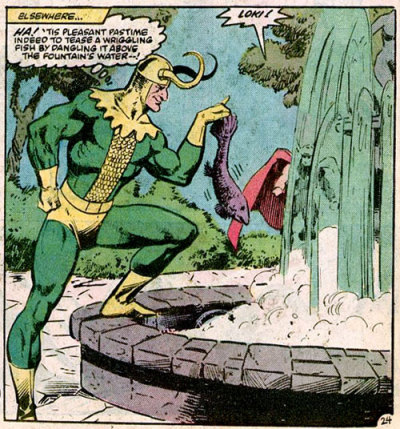
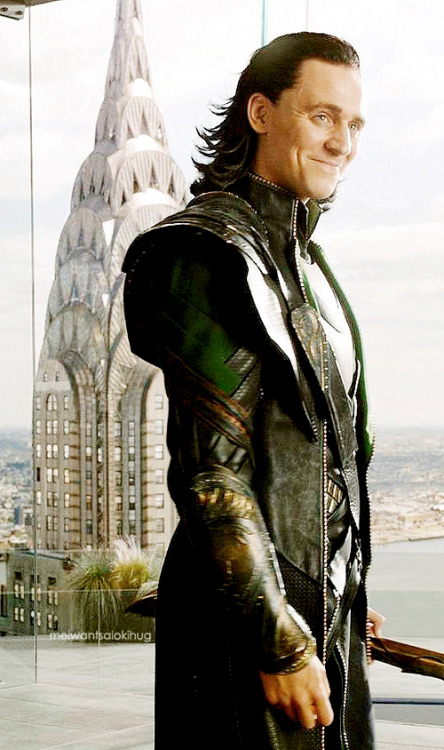
The entire film, I wanted Samuel L. Jackson, playing Nick Fury, to start screaming a litany of curse words, out of nowhere.  SHIELD Agent Phil Coulson (calling to mind Charles Colson) played by Clark Gregg, is the thread running from Iron Man through the rest of the films and on up into The Avengers, where he plays the part of Captain America's biggest fan and, later on, "the avenged".  Scarlett Johansson manages to explain why Black Widow is essential to the team dynamic by being the world's best interrogator.  Jeremy Renner as Hawkeye gets only a few spots to shine in the film, but he uses them effectively.  Bruce Banner is played for the first time by Mark Ruffalo, who does a bang-up job playing the eccentric gamma-irradiated scientist.  Better by far than any previous actor that filled the role, if you want to come down to it.  Tom Hiddleston is the core of the movie as Loki, and in the final analysis is one of the best actors in the film.  Something about Chris Hemsworth as Thor strikes me as a little too simple. Maybe that's the point. He has a good laugh for Thor, it's just that he walks with just the wrong degree of swagger to pull off "god of thunder", in my humble opinion.  Chris Evans, on the other hand, manages to sell Captain America's soldier boy appeal effortlessly, and of course, Robert Downey Jr. embodies Tony Stark to the extent that at certain points it doesn't feel like he's bothered to read the script, he's just channeling a genius billionaire philanthropist from a parallel reality.

Part of what can tell you how good a band is is how well the audience responds to their performance. By that measure, and given that the entire theater withstood fifteen hours of cinema for The Avengers, the movie is a rousing success. Big laughs from the audience.  Spontaneous applause. Bigger action.

Joss Whedon has proven something great about himself this summer.  He's the current nerd king of Hollywood, and we shall all bask in his light until the cycle of cinema degenerates again, in a new flashier more gimmicky Tour de France.

I want to give him a firm handshake for a job well done, right after I sign up for basic training.

Wednesday, April 25, 2012

The Cabin in the Woods: A Final Comment on the Horror Genre


Frickin' Rubik's Cube of the Damned, this is.

Fair warning: with this assessment of Joss Whedon and Drew Goddard's "Cabin in the Woods", there will be a certain amount of plot point divulging, meeting somewhere between a review and a summary.  It's been interesting to note the reaction of people that have seen the film, in that they do not seem to want to give away too much to those that have not seen it.  In that spirit, it's a thin line that critics must walk in order to properly examine a film who's layered approach entertains audiences best when they have less information going in, while not fully divulging too much actual content.

While we're at it, let's look at this brief reversal of standard gender roles in slasher flicks, through a one way mirror.

The initial premise is very basic.  It is, on the surface, the most trite cliche of the horror genre.  Five fresh-faced college students go to a cabin in the woods for a weekend of fun and things go horribly wrong.  Any viewer remotely familiar with this premise can guess that they are in store for a little sex and a lot of violence.  Anyone familiar with Goddard's work on the ABC series Lost or Whedon's with Buffy the Vampire Slayer can also make a safe bet going into the film that there will be a twisting convolution of the initial premise and an honest love of the horror genre, for all of its faults.

The five characters are designed as archetypes, distinct from the usual stereotypes prevalent in every single film following this one's basic premise.  The fool, the warrior, the scholar, the virgin, and the whore. In the first five minutes of the film, however, we are introduced to two other character types that are more uncommon in horror and actually seem more suited to office comedies.  The older project head and the office joker with woman problems, Sitterson and Hadley.  These men and the project they are working on are interspersed with the plot, since it is obvious that they are the masters of ceremony for the events taking place.  They also serve as ample comic relief throughout the film, and can be interpreted as in-film proxies for the writers as well as the audience.  But more on that in a moment. Elements of The Truman Show and The Matrix bleed through almost immediately upon our exposure to the banks of computer monitors that Sitterson and Hadley are surrounded by, but these similarities are compounded when it's established that they can pump mind-altering substances in through the cabin's vents as well as the forest floor, that they run environmental controls around the cabin, that they are the ones that open the cellar door kick-starting the horror, and that every nook and cranny of the cabin and forest is lined with tiny fiber optic cameras. "Watch the master at work," indeed.

Where we, as the audience, are expected to do our part, comes in our exposure to any horror movie that has ever been written prior to this one, a partial awareness of each trope.  There are standard reactions to be expected from us, outside of chainsaw-themed dreams after the film.  We flinch, we squeal, we yell at the screen, we laugh, we curse the idiotic heroes and we cheer the villains that lay out brutal justice on horny half-wits and jerks.  We, as the audience of individuals, relate to certain characters while loathing others.  We invest ourselves in the movie's aura,  whether in the shrine of a cinema or the pale glow of a computer screen, and we react to the input with output.  Even though we suspend disbelief and dislocate reality, and in doing so buy the mythology laid out by the film-maker, we must ultimately embrace the real one.  

This movie plays with all that while maintaining a cool comic timing, but it expects more.  The question is asked, where does our fascination with horror come from?  What is the root of fear? We see certain lines blurred and expectations burned, right from the start.  Sublime terror of suburbia, Hadley at the water cooler, complaining that his wife has put child safety catches on all the drawers in their house, even though they just started fertility treatments.  Just another job, just another schlub.  The familiarity of this banter and the humorous nuance of the kids preparing to go to the cabin is set up to endear us to them, early on, in a manner that many horror movies fail to even hint at in an entire course of the film.  Laughter.  The genuine laughs throughout this film are what draw us in more than anything.  The horror genre has been bent off its axis and fused with comedy, without losing our interest. The game has officially been changed, or rather, it returns to the purpose it should serve, which is catharsis.

The distinction of course being that we are dealing with professionals here, both on-screen and off.  The operation that brought these kids to the cabin in the first place is a strong part of the social system that binds, an idea pointed out by the fool character early on.  The production company that made this film is part of a similar social system that plays itself out in all media, just as binding, but less Ancient Evil God oriented.  Or is it?

At a certain point, a Marine guard, the audience's stand-in for a fresh point-of-view in the operation cut-away, asks why the nudity of the whore is necessary.  The response could very well be a representative of the movie company, speaking for shareholders. "We're not the only ones watching here. We got to keep the customer satisfied. You know what's at stake here."  Being prepped is not being prepared.

In any event, rather than giving a simple play-by-play of the entire film, we'll continue our analysis by touching on a few major points where The Cabin in the Woods intersects with other films of its genre, while sussing out the resonance of certain lines and scenes with their "meta value", then break down the overarching impact of Lovecraftian mythos, and how, with this film, they trump all other forms of horror.

When the characters arrive at a gas station and meet the Harbinger, a throwback to the angry spirit of Texas Chainsaw Massacre, we get our first clue of titles and intents, set up in plain sight.  Soon after, this tension is diffused into comic relief when the Harbinger puts a call into Sitterson and Hadley, ranting about blood sacrifice for a while before realizing that he's been put on speaker phone.  This sort of undercut is played out with almost every tension built by the horror element of the film, working for it on first viewing, but perhaps not on successive ones.

Our textured protagonists, meanwhile, are enjoying their arrival at the cabin.  A scene is inserted to play off stereotypical gender roles from slasher flicks gone past; the scholar character removes a disturbing painting from the wall of his room to discover that he's on the transparent side of a one-way mirror. Of course, the virgin character enters the room and start primping herself in the mirror. Then undressing.  The natural conclusion is curtailed for a moralistic flip flop, where after switching rooms, the virgin sees the scholar undressing, and he is ripped.  While this is not akin to any specific film from the horror genre, it is a blatant commentary on standard stereotypes in the "slasher sub-genre",  famous for idiot starlets getting naked for a brief visceral thrill before dismemberment.  The one-way mirror scene subverts and twists that, backhandedly but uniquely.

Bypassing a silly tag line repeated throughout the film ("Let's get this party started!"), the inevitable game of Truth or Dare finishes up with the cellar door banging open, immediately reminiscent of Sam Raimi's Evil Dead, which from the first shot of the cabin soaks this film like brine soaks a pickle.  After daring the virgin to go down the stairs, the quintet discovers a collection of interesting items immediately familiar as the objective correlatives to monsters from horror movies: a conch shell, an amulet, a puzzle box, a ballerina music box, and of course, a diary from which an ancient Latin invocation is read aloud by the virgin.  This invocation summons a family of zombified pain-worshipping backwoods cannibals, whose dramatic arrival is undercut, as is standard, by Sitterson and Hadley's "monster betting pool".  This is them blowing off steam in the same way that we, the audience, laugh at the on-screen brutality.

At the end of the day, though, the humorless cosmic toxicity of H.P. Lovecraft's Ancient Evil makes its presence known in the film, and ends up subsuming all that came before it, literally.  Less blatant than the Necronomicon of Sam Raimi's day, the construct of this film, the bound-in sacrificial pit of the forest and the cabin, serves as a sacrifice of the archetypes to a sleeping Ancient One.  Since the operation our movie is involved in is global in scale, we can presume that there are multiple Ancient Ones throughout the world, accepting their yearly offerings in exchange for relative peace.  This is exemplified best in an invocation made by our goofy office-mates after the death of the whore. "This we offer in humility and fear, for the blessed peace of your eternal slumber. As it ever was."  The key line of course being the last, for in the Lovecraft mythos we find the invocation of the Old Ones as "The Old Ones are. The Old Ones were. The Old Ones will be."

After brutal deaths of all archetypes but the virgin and the fool, an elevator into the lower levels of the sacrificial forest is discovered.  Here, likely by design, we find elements of the movie Cube, as well as a hint of the anti-bureaucratic sentiment of that film.  There is a menagerie of monsters, too varied for a viewer to take in with only one sitting, set up and awaiting the activation of the appropriate objective correlative in the basement of the cabin.  The virgin finally establishes that they have been puppets all along, victims of fate, or rather, sacrifices to a vast creature of unimaginable evil.  Another exchange from earlier on in the film, between the Marine and a Chem Department scientist, gives us more of an idea of the puppetmaster the fool can only speculate on for most of the film.  The monstrous menagerie, or stable, is populated by remnants of the "old world" courtesy of "You-know-who" (pointing downward).

Lovecraft's Cthulu is often called the dreaming god, and the Ancient One addressed with sacrifice in this film is similar in scope if not location (Cthulu sleeps underwater, in R'yleh). Perhaps the concept of dormant but stirring cosmic evil controlling social norms behind a sticky curtain resonates with the core of humans more than we are likely comfortable with admitting.  It is not terribly far-fetched, the idea that society sits at the edge of chaos, binding, as it is, with laws and debts and pragmatic dismissals of pure autonomy, and it is rare enough that any horror film outside of a zombie apocalypse flick would approach this matter, let alone with such nuance as Cabin in the Woods manages.

In the final analysis, this movie is less about exploring the stereotype of Chris Hemsworth's "No matter what, we have to stay together" than it is about the less-lightly explored resonance of Sigourney Weaver's "It's our task to placate the Ancient Ones, as it is yours to be offered up to them."  In an interview regarding the film, Whedon cited John Carpenter as an influence, and likely the movie he was considering when he said that was the highly under-rated In the Mouth of Madness, perhaps the purest Lovecraftian movie to be made without being a direct translation. 

Before concluding, we'll dwell momentarily on the idea of the Ancient Ones presented by Goddard and Whedon, and  or Elder Evils, Lovecraft's take on a clearly Gnostic (and fittingly, very old) concept known as the Archons.  Imprisoned in gross matter, the souls of the world seek reunification with the Wholeness. The corrupted and complicated machinations of the Archons, rulers of this world, keep mankind from achieving spiritual fulfillment.  And as evidenced in our own world, the many must suffer for the few, and vice versa.  To this end, and along these lines, correlatives to Cabin in the Woods emerge, if you look at the content and themes touched, only slightly askance. 

We live in a world of true horror, and evil in the form of negligence and corruption and bigotry.  On grander scales, the still-mounting nuclear disaster in Fukushima, the ongoing Gulf of Mexico oil horror, the forever threat of terrorism at home and abroad, and so many other things brought about by society's trends towards mankind's detriment dwarf any mythological beast we can conjure with our most fevered imaginations, but they arise as a direct response to such things.  Our need for catharsis through control is our reaction to true dread, our desire is to undercut our feeble fragility in the face of pure and pungent terror.  So it is that we express ourselves through the opiates known as television and the movie theater.  The audience seeks control, the same as the operators of the sacrificial cabin, and they serve faceless entities with all the rights to and none of the joys of humanity.  The audience is the sacrifice to those faceless entities at the same time.  The idea of control is illusory and at best temporary.  Chaos runs rampant, regardless.  Like Cthulu, the audience dreams, unwitting, on the Plateau of Leng.  

The time will come that a tremendous hand shoots out of the ground and strikes you, ending your fantasy, your brief comfort.  Same as it ever was. 

Sweet dreams.   


I don't get it.


Saturday, June 11, 2011

A Quick Review of The Tree of Life


 -
Far more qualified individuals than myself would surely have more specifically technical accolades than I am going to provide in my review of Terrence Malick's esteemed new film The Tree of Life, but given that my movie-going experience is often selective, and given my deep emotional reaction to the film, I thought I would commit to the technological archives a few points brought up in the film and how they resonated with me.
-
The quality of silence informs the preciousness of many scenes.  Dialogue, monologue, float freely in and out of scenes.  The cinematography is flawless in its perspective. We shift among the various members of the family, the youngest of three brothers not given a voice. The point of view we are given for this microcosmic portion of the film, the thread throughout, often rises from below, simulating the point of view of any given character. We interweave between them, and alternate throughout, but most note-worthily  the beginning and end, a more cosmic thread represented with views of planetary formations, stellar phenomena, the creation and cultivation of life forms, and so on.  What is sought in this film is answers to questions. The loss of innocence. The pull and push of nature and grace.  We receive, if we view the film without an ironic or arrogant glaze, a sense of mortality and the utter beauty of existence.
-
Following the family thread of story, we find Mr. O'Brien represents a strict patriarch of the family unit. Pitt shows his depth as an actor in each expression, representing a man struggling with his own demons, while steadfastly seeking a better life for his much-loved family, perfectly expressing the tumultuous nature of the masculine in America during the time period in which the film is set, roughly the 1950's through the 1970's in Waco, Texas, on into the era deemed present day. Penn fills the role as a man of means, tortured by his own past, feeling like the walls are closing in. This is contrasted with his workplace, an open well lit building in the heart of a metropolis.
-
A plesiosaur regards its mortal wound on a Mesozoic beachfront.  A parasaurolophus lying and possibly dying on a river shore is regarded with curiosity by another dinosaur.   A mother receives notice of her son's death, presumably in the Vietnam conflict.  A chorus sings as jellyfish fill the screen. Due to a flawless soundtrack to compliment the camerawork, the shift through time and space and intimately familiar interactions between the tiny cast of characters is painless, seamless, and altogether enriching. This movie is a rewarding experience.
-
The title can be explained both in the recurring tree, shot from below, that emerges onscreen again and again. It can also be extrapolated in the parents of the protagonist as pillars, much as the tree of life in Kabbalistic theology, wrestling, as the film does, as Job did, with the psychological make up of God. The mother represents the passive principle, the pillar of mercy or as it is presented in the movie Grace. The father in turn represents the active principle, the pillar of judgment or as it is presented in the movie Nature. The protagonist, Jack, possesses a recurring name in fairy tales and folklore, and fits so far as protagonist rogues go, he's the center pillar, the grey middle path all men seeking balance must walk.
-
It is of course always interesting to note the audience's reaction, that conversation you have with your date or your friend as you leave the theater. The man in the seat behind me that laughed when the parasaurolophus appeared on screen was muttering something about someone popping in a Planet Earth DVD.  A young art school student was heard to start off with "I was thinking about a Warhol film at a certain point..." and the most frequently murmured statement among teenage boys was "What was up with the dinosaurs..."
-
I couldn't help but notice telephone screens flash up throughout the audience towards the end of the film, people checking the time.  The film's setting hearkens back to an age if not any more innocent then at least less complicated by the binds of social technology than our own. If one appraises the film with an eye to the message and has anything invested in that message they will walk away enriched for having seen it.  To people more oriented towards esoteric cinema, it is shiny hip and soon to become old hat, or at the very least a good conversation starter.  To the masses, the sort that would say, determine their viewing of the film solely based on the fact that Pitt is in it, there might be confusion and even churlish disregard for the filmmaker's ample contribution to cinema, a film designed to make a person feel a sense of the spirit which animates all life, the inevitability of mortality, and the importance of love within one's family.  This was a beautiful film and I am pleased to have taken the time to assess it in my own fashion, for whatever that is  worth.  

Lane Williams
6/11/11
Chicago, IL